
Topic Battle

Where Everything Fights Everything

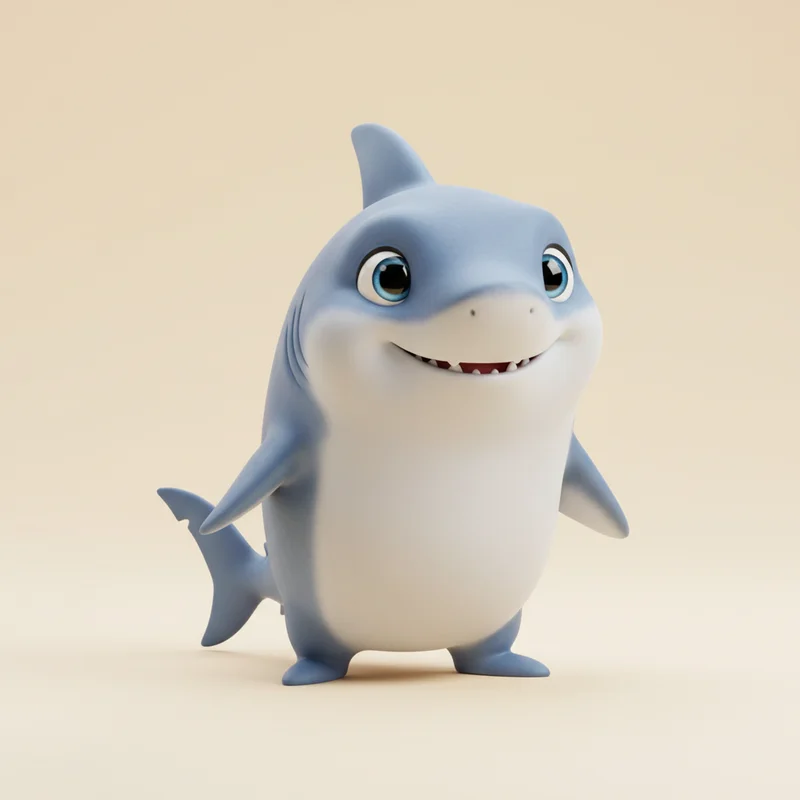
Shark

Shark

Apex ocean predator with 450 million years of evolutionary refinement and unfair movie villain reputation.

VS
The Internet

The Internet

Global network of information and cat videos.

Battle Analysis

Speed The Internet Wins
30%
70%
Shark The Internet

Shark

The shortfin mako shark achieves burst velocities exceeding 74 kilometres per hour, making it the fastest shark species documented. The great white shark, whilst marginally slower, can accelerate from near-stationary to full attack velocity in under two seconds. This represents millions of years of hydrodynamic refinement, each fin placement and dermal denticle orientation optimised for explosive acceleration through one of the most resistant mediums on Earth.

Water, it bears noting, is approximately 784 times denser than air, rendering these speeds genuinely remarkable from a physics perspective.

The Internet

Data traversing fibre optic cables approaches two-thirds the speed of light, approximately 200,000 kilometres per second. A photograph of one's breakfast can circumnavigate the globe in approximately 133 milliseconds. The latency between London and Sydney, some 17,000 kilometres, measures roughly 250 milliseconds under optimal conditions.

This velocity operates at scales so far removed from biological experience that meaningful comparison becomes almost philosophically problematic. The shark's impressive burst seems rather quaint when measured against electromagnetic propagation.

VERDICT

Electromagnetic transmission at 200,000 km/s renders biological velocity comparatively glacial.
Adaptability The Internet Wins
30%
70%
Shark The Internet

Shark

Sharks occupy environments from tropical coral reefs to Arctic waters, from abyssal depths to brackish estuaries. The bull shark famously ventures thousands of kilometres up freshwater rivers. Different species have adapted to nearly every marine ecological niche, demonstrating remarkable physiological plasticity.

However, this adaptability operates on evolutionary timescales, requiring thousands of generations to produce significant change.

The Internet

The internet adapts in real-time. When mobile devices proliferated, responsive design emerged within years. When video bandwidth demands increased, compression algorithms evolved accordingly. The system routes around censorship, recovers from infrastructure damage, and incorporates new technologies with remarkable fluidity.

This adaptation occurs at speeds that make biological evolution appear effectively static. The internet of 2010 bears little resemblance to the internet of today.

VERDICT

Real-time technological adaptation vastly outpaces evolutionary modification timescales.
Global recognition The Internet Wins
30%
70%
Shark The Internet

Shark

The shark silhouette ranks among the most universally recognised shapes on Earth. From landlocked Mongolia to the Swiss Alps, humans identify the distinctive dorsal fin with immediate visceral response. Hollywood has amplified this recognition through decades of cinematic attention, from Jaws to The Meg.

Shark Week commands millions of annual viewers. The creature has transcended mere biology to become a cultural archetype representing danger, power, and primal nature itself.

The Internet

The internet has achieved a form of recognition that transcends symbolism entirely: it has become infrastructural reality for over 60 percent of humanity. One does not recognise the internet so much as exist within its influence. It shapes commerce, communication, politics, and entertainment with such thoroughness that its absence would constitute civilisational crisis.

Unlike the shark, the internet possesses no single recognisable form, yet its presence saturates modern existence comprehensively.

VERDICT

Infrastructural ubiquity affecting 60 percent of humanity surpasses mere symbolic recognition.
Intimidation factor Shark Wins
70%
30%
Shark The Internet

Shark

The shark commands what researchers term instinctive fear response, triggering physiological reactions in observers regardless of actual danger assessment. Heart rates elevate, pupils dilate, and stress hormones flood the bloodstream at mere glimpse of that distinctive silhouette. This response appears partially innate, suggesting evolutionary encoding from ancestors who encountered marine predators.

A great white shark approaching through murky water remains one of nature's most genuinely terrifying sights.

The Internet

The internet's intimidation operates on existential rather than visceral frequencies. It threatens not physical integrity but privacy, reputation, and psychological wellbeing. The prospect of digital cancellation, data breach, or viral humiliation produces anxiety responses increasingly comparable to physical threat perception.

Children fear online predators. Adults fear algorithmic manipulation. Governments fear coordinated information warfare. The internet's intimidation is diffuse but pervasive.

VERDICT

Primal biological terror response proves more immediately potent than digital anxiety.
Evolutionary success Shark Wins
70%
30%
Shark The Internet

Shark

Sharks have persisted through five mass extinction events, including the cataclysm that eliminated the dinosaurs. Their basic body plan has proven so effective that it has required minimal modification across 450 million years. They predate trees. They predate the colonisation of land by vertebrates. When Tiktaalik first hauled itself onto primordial shores, sharks had already been perfecting their craft for 200 million years.

Over 500 species currently populate Earth's oceans, from the diminutive dwarf lanternshark to the magnificent whale shark.

The Internet

The internet's evolutionary trajectory spans merely five decades, from ARPANET's humble four-node beginning in 1969 to a network connecting over five billion users. Its development has followed a pattern eerily reminiscent of biological evolution: protocols compete, inefficient designs perish, and successful architectures proliferate.

TCP/IP represents a kind of digital DNA, a fundamental information-encoding system that has proven remarkably adaptable. Yet fifty years hardly constitutes a meaningful test of evolutionary fitness.

VERDICT

Four hundred fifty million years of continuous success across five extinction events.
👑

The Winner Is

The Internet

42 - 58

The outcome of this analysis reveals a curious temporal asymmetry. The shark represents proven excellence across geological epochs, its design validated by hundreds of millions of years of continuous operation. The internet, conversely, offers capabilities that render biological achievements almost irrelevant whilst remaining fundamentally unproven over meaningful timescales.

With a final assessment of 58 to 42 in favour of the internet, we acknowledge digital supremacy in measurable metrics whilst recognising that the shark's longevity commands profound respect. The internet may dominate today's criteria, but whether it persists through even one extinction event remains entirely speculative.

Shark
42%
The Internet
58%

Share this battle

More Comparisons