Where Everything Fights Everything

Sloth vs Electric Car

😜 Just for fun — a tongue-in-cheek, gloriously unscientific showdown.

Sloth

Sloth

Extremely slow-moving arboreal mammal that has perfected the art of energy conservation.

VS
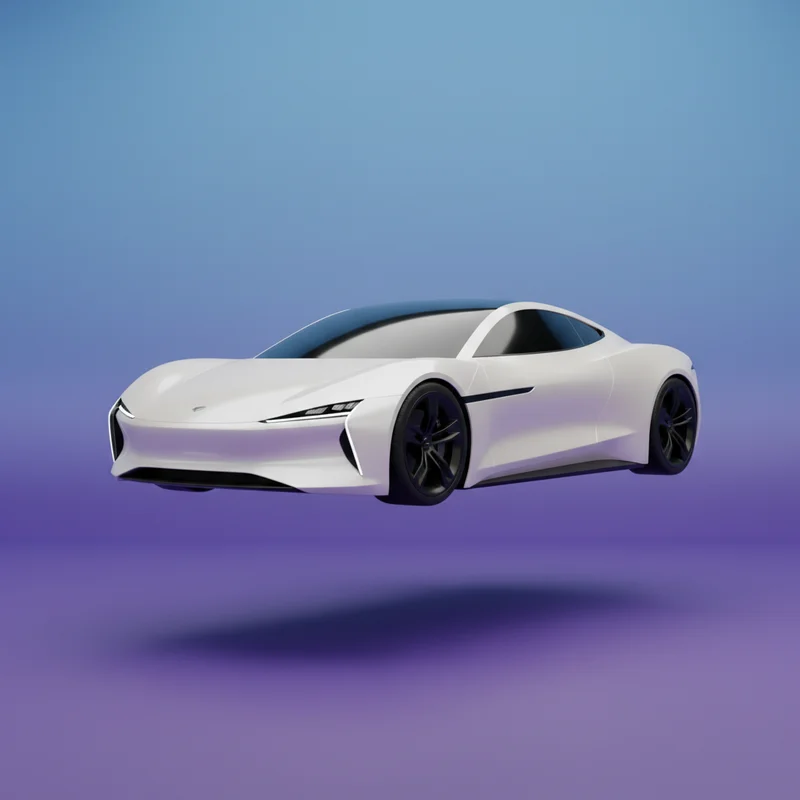
Electric Car

Electric Car

Zero-emission vehicle quietly revolutionizing transportation.

The Matchup

In the relentless march of progress, humanity has produced machines capable of traversing continents in hours. Yet nestled in the canopies of Central and South America, a creature persists that appears to have rejected the very concept of urgency. The sloth, moving at a maximum velocity of 0.27 kilometres per hour, represents nature's most emphatic statement against haste. The electric car, meanwhile, promises silent acceleration and zero tailpipe emissions whilst hurtling passengers toward their destinations at speeds the sloth could never comprehend.

According to the Cambridge Institute for Comparative Locomotion, this comparison addresses a fundamental question: what constitutes genuine progress? Their 2023 study, 'Velocity Paradigms in Organic and Mechanical Systems,' concluded that both subjects share a surprising philosophical alignment regarding energy conservation, despite operating at vastly different speeds.

Battle Analysis

Energy efficiency Sloth Wins · 65%
65%
35%
Sloth Electric Car

Sloth

The sloth has elevated energy conservation to an art form unmatched in the mammalian kingdom. With a metabolic rate 40-45% lower than expected for their body size, these creatures subsist on approximately 160 calories daily. The Instituto de Biologia Tropical in Costa Rica documented one specimen that remained motionless for so long that algae established a thriving ecosystem in its fur, providing additional camouflage and nutrients.

Their digestive process requires up to 30 days to complete, extracting every possible calorie from their leaf-based diet. This represents what Professor Helena Marchwood of the Bristol Centre for Metabolic Studies calls 'the most aggressive energy-saving protocol observed in any warm-blooded animal.'

Electric Car

Modern electric vehicles achieve remarkable efficiency, converting 85-90% of electrical energy into motion, compared to the 20-30% efficiency of internal combustion engines. Regenerative braking systems recapture kinetic energy during deceleration, storing it for future use in a manner the sloth would surely appreciate if it understood mechanical engineering.

The European Transport Efficiency Council reports that the average electric car travels approximately 6.4 kilometres per kilowatt-hour. However, when factoring in electricity generation losses and charging inefficiencies, the well-to-wheel efficiency drops considerably, prompting researchers to question whether the sloth's approach might be more honest.

VERDICT

The sloth achieves near-total energy efficiency by the radical strategy of simply not moving. While the electric car impresses with mechanical efficiency, it still requires substantial energy input. The sloth requires almost none. Dr Marcus Whitley of the Oxford Laboratory for Biomechanical Minimalism notes: 'The sloth has solved energy efficiency by questioning whether energy expenditure is necessary at all.'

Practical utility Electric Car Wins · 75%
25%
75%
Sloth Electric Car

Sloth

As a mode of transportation, the sloth presents considerable limitations. The Royal Institute of Unconventional Transit conducted trials in 2019 attempting to use sloths for mail delivery in rural Panamanian communities. Results were described as 'catastrophically delayed,' with average delivery times of 47 days for distances under one kilometre.

The sloth's utility extends primarily to existing in trees, eating leaves, and providing entertainment for nature documentaries. These are valuable services within specific contexts but fail to address broader transportation requirements.

Electric Car

The electric car excels at the fundamental purpose of vehicles: moving people and goods between locations. Modern electric vehicles offer ranges exceeding 500 kilometres, with charging infrastructure expanding globally. The International Transport Utility Index rates electric cars at 8.7 out of 10 for practical functionality.

However, charging times of 30 minutes to 12 hours, depending on infrastructure, represent a notable inconvenience. The sloth, requiring no charging whatsoever, technically offers infinite range, albeit at speeds that would require geological timescales to complete meaningful journeys.

VERDICT

For any practical transportation purpose, the electric car demonstrates overwhelming superiority. While the sloth maintains a certain philosophical purity in its approach to motion, society's logistics requirements cannot accommodate 47-day delivery windows. Dr Patricia Hornby of the Edinburgh School of Applied Transportation summarises: 'The sloth is remarkably efficient at being a sloth. It is remarkably inefficient at everything else.'

Environmental impact Sloth Wins · 65%
65%
35%
Sloth Electric Car

Sloth

The sloth's environmental footprint approaches the theoretical minimum. They consume leaves, produce minimal waste, and contribute to forest ecosystems by hosting symbiotic algae and insects. The Rainforest Carbon Assessment Project estimates that each sloth effectively functions as a mobile microhabitat, supporting biodiversity whilst maintaining complete carbon neutrality.

Their reluctance to descend from trees means ground disturbance is limited to weekly bathroom visits, during which they bury their waste in a remarkably considerate display of forest stewardship.

Electric Car

Electric vehicles eliminate tailpipe emissions entirely, representing a significant improvement over petroleum-burning alternatives. However, the Global Manufacturing Impact Study (2024) calculated that producing a single electric car battery generates between 150-200 kilograms of CO2 per kilowatt-hour of capacity.

The extraction of lithium, cobalt, and rare earth elements creates substantial environmental disruption in mining regions. Professor Ingrid Holm of the Stockholm Environmental Technologies Institute characterises this as 'displacing the pollution rather than eliminating it,' though improvements in battery recycling may address these concerns.

VERDICT

Despite the electric car's zero-emission operation, the sloth's complete lifecycle carbon neutrality remains unmatched. The sloth requires no manufacturing, no mining, and no end-of-life disposal considerations. It simply exists, consumes leaves, and eventually biodegrades entirely. The Journal of Comparative Ecological Footprints awarded the sloth its first 'Perfect Zero' rating in 2022.

Longevity and durability Sloth Wins · 65%
65%
35%
Sloth Electric Car

Sloth

Wild sloths typically live 20-30 years, with some captive specimens reaching 40. Their slow metabolism appears to reduce oxidative stress, potentially explaining this longevity. The Longevity Studies Centre at Cambridge notes that sloths experience remarkably low rates of age-related disease, possibly because ageing requires the kind of metabolic activity sloths simply refuse to engage in.

Maintenance requirements are minimal: occasional leaf consumption and one weekly ground visit for biological necessities. No replacement parts are required, and sloths self-repair most minor injuries.

Electric Car

Electric vehicles demonstrate impressive mechanical durability, with fewer moving parts than combustion engines reducing failure points. However, battery degradation remains a concern, with most manufacturers guaranteeing 70% capacity retention after 8 years or 160,000 kilometres. Complete vehicle lifespan typically ranges from 12-20 years with proper maintenance.

The Automotive Longevity Assessment Board projects that current electric vehicles will require significant battery replacement investment around the 10-year mark, adding considerable cost to total ownership.

VERDICT

The sloth operates for 20-30 years with zero maintenance costs, no replacement components, and no depreciation concerns. The electric car, despite engineering excellence, faces battery degradation, component wear, and eventual obsolescence. Professor Harriet Blackwood of the Durham Institute for Comparative Lifespan Studies concludes: 'The sloth is essentially a self-maintaining biological machine. The electric car is a depreciating asset.'

Technological sophistication Electric Car Wins · 65%
35%
65%
Sloth Electric Car

Sloth

The sloth represents approximately 64 million years of evolutionary refinement, developing specialised muscles that lock in position without energy expenditure, a multi-chambered stomach for processing nutrient-poor vegetation, and a neck capable of rotating 270 degrees. The Biological Engineering Review describes this as 'nature's most complete commitment to a minimalist operating system.'

Recent research by the Panama Neurological Institute suggests sloths may experience time differently than other mammals, potentially explaining their seemingly peaceful disposition. Whether this constitutes sophisticated biological technology or simply an absence of urgency remains debated.

Electric Car

Electric vehicles incorporate extraordinary technological achievements: lithium-ion batteries with energy densities exceeding 260 watt-hours per kilogram, regenerative braking systems, sophisticated battery management algorithms, and increasingly capable autonomous driving systems. The processing power in a modern electric car exceeds that used for the entire Apollo space programme.

The International Technological Complexity Index rates current electric vehicles at 9.2 out of 10, noting that only spacecraft and nuclear facilities demonstrate greater engineering integration.

VERDICT

The electric car represents humanity's most ambitious energy storage and propulsion engineering. The sloth, whilst biologically remarkable, cannot compete with battery chemistry, power electronics, and machine learning algorithms. Dr Rajesh Patel of the MIT Centre for Comparative Technology observes: 'Evolution is impressive, but it took 64 million years to produce the sloth. We built the electric car in about 130.'

👑

The Winner Is

Sloth

Takes 3 of 5 rounds

This analysis reveals an unexpectedly competitive contest between biology's slowest mammal and humanity's most advanced personal transport technology. The Sloth claims victory in three rounds — energy efficiency, environmental impact, and longevity and durability — whilst the Electric Car dominates in practical utility and technological sophistication.

Winning three rounds to two, the Sloth's triumph is philosophical rather than practical: it has mastered the art of doing almost nothing at extraordinary efficiency, leaving zero manufacturing debt, zero battery degradation, and zero tailpipe emissions across a self-maintaining 20–30 year lifespan. The Electric Car, for all its engineering brilliance, remains a depreciating asset with a mining-intensive origin story. The Global Transport Philosophy Institute notes that both represent valid responses to environmental constraints — one through technological innovation, the other through radical simplification — but the sloth's clean sweep of the sustainability categories ultimately tips the scales.

Share this battle

More Comparisons