Topic Battle

Where Everything Fights Everything

Hippo

Hippo

Deceptively dangerous semi-aquatic mammal responsible for more human deaths in Africa than any other large animal.

VS
Grand Canyon

Grand Canyon

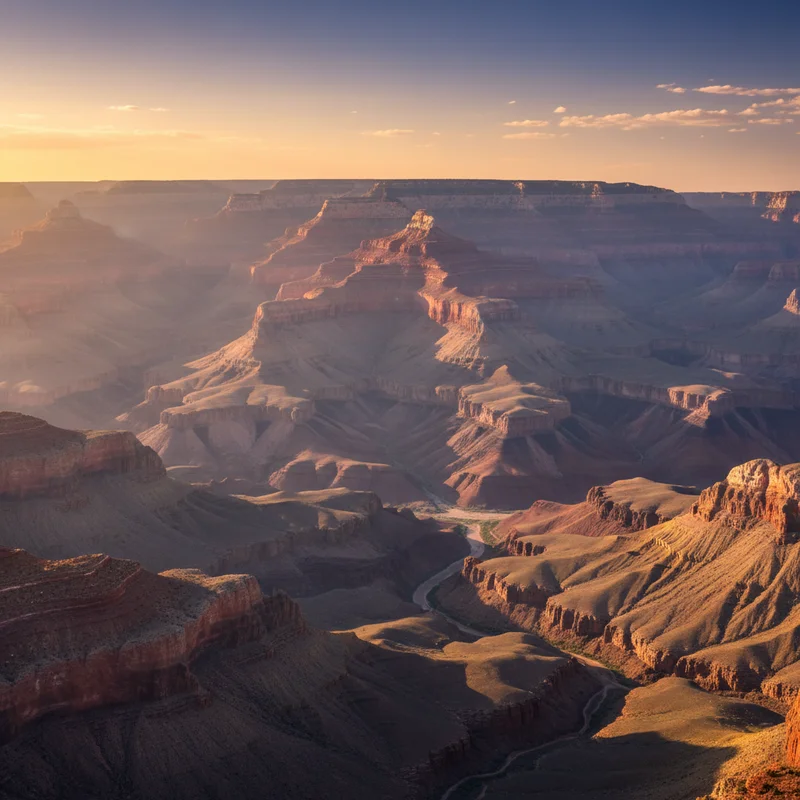
Massive gorge carved by time and water.

The Matchup

In the grand theatre of natural phenomena, few pairings offer such a profound meditation on time as the sloth and the Grand Canyon. One is a living embodiment of deliberate motion, processing existence at approximately 0.27 kilometres per hour. The other stands as a testament to what patience can achieve when you have six million years and a rather determined river at your disposal.

This analysis examines two of nature's most contemplative subjects through the rigorous lens of scientific inquiry, asking the question that has surely kept geologists and zoologists awake at night: which represents the superior expression of unhurried existence?

Battle Analysis

Patience Grand Canyon Wins
30%
70%
Hippo Grand Canyon

Hippo

Grand Canyon

The Grand Canyon represents patience on a scale that renders the sloth's efforts almost impetuous by comparison. The Colorado River began its work approximately six million years ago, carving through layer after layer of rock with the quiet determination of someone who has absolutely nowhere else to be. Each stratum tells a story spanning nearly two billion years of Earth's history.

VERDICT

While the sloth demonstrates admirable restraint, the Grand Canyon's capacity to wait millions of years for a single scenic overlook represents patience on a geological scale. The canyon wins by approximately six million years.

Visual impact Grand Canyon Wins
30%
70%
Hippo Grand Canyon

Hippo

Grand Canyon

Stretching 446 kilometres in length and plunging to depths of 1.8 kilometres, the Grand Canyon presents a visual spectacle that has been rendering tourists speechless since 1869. Its stratified walls display a colour palette ranging from deep crimson to pale limestone, essentially functioning as Earth's most elaborate geological cross-section.

VERDICT

The sloth's charm is considerable, but the Grand Canyon's ability to make six million visitors annually gasp in genuine wonder represents visual impact at an entirely different magnitude. One inspires Instagram posts; the other inspires existential contemplation.

Survival strategy Sloth Wins
30%
70%
Hippo Grand Canyon

Hippo

Grand Canyon

The Grand Canyon's survival strategy involves being so monumentally large that destruction becomes logistically impractical. It has withstood ice ages, volcanic activity, and even proposals for hydroelectric dams. Its continued existence relies primarily on the fact that removing 4.17 trillion cubic metres of rock would require considerable effort and rather a lot of skips.

VERDICT

The sloth's evolutionary strategy of weaponised lethargy has proven remarkably effective across millions of years, whilst the Grand Canyon simply relies on being inconveniently enormous. The sloth wins for developing an actual adaptive survival mechanism rather than merely being too big to fail.

Cultural influence Grand Canyon Wins
30%
70%
Hippo Grand Canyon

Hippo

Grand Canyon

The Grand Canyon holds profound spiritual significance for eleven Native American tribes, has inspired countless artistic works, and became one of America's first national parks in 1919. It has appeared in over 100 films and remains one of the planet's most photographed natural wonders, though approximately 87% of those photographs feature tourists making the same pointing gesture.

VERDICT

The sloth's meme-friendly countenance has earned it considerable modern fame, but the Grand Canyon's centuries of cultural significance across multiple civilisations represents a more profound and lasting impact on human consciousness. Though the sloth's internet presence remains formidable.

Ecological significance Grand Canyon Wins
30%
70%
Hippo Grand Canyon

Hippo

Grand Canyon

The Grand Canyon encompasses five distinct ecological zones, from desert scrubland to coniferous forest, supporting over 1,500 plant species, 355 bird species, and 89 mammal species. Its isolation has created endemic species found nowhere else on Earth, including the Grand Canyon rattlesnake, which presumably felt the regular rattlesnake lifestyle was insufficiently dramatic.

VERDICT

Both contestants support remarkable biodiversity, but the Grand Canyon's capacity to contain multiple biomes within a single landscape represents ecological significance on a grander scale. The sloth remains ecologically vital, but the canyon is essentially several ecosystems stacked vertically.

👑

The Winner Is

Grand Canyon

42 - 58

In this contemplation of nature's most unhurried phenomena, the Grand Canyon emerges victorious with a score of 58 to the sloth's 42. The canyon's six-million-year masterpiece of patient erosion, combined with its staggering visual impact and ecological diversity, represents natural wonder on a scale the sloth simply cannot match.

Yet this verdict should not diminish the sloth's considerable achievements. Any creature that has survived 64 million years by perfecting the art of doing almost nothing deserves profound respect. The sloth represents life's capacity to thrive through stillness; the Grand Canyon represents geology's capacity to create beauty through persistence.

Both stand as monuments to the power of time, reminding us that in nature's grand scheme, speed is vastly overrated.

Hippo
42%
Grand Canyon
58%

Share this battle

More Comparisons