Topic Battle

Where Everything Fights Everything

Zebra

Zebra

African equine featuring distinctive black and white stripes that confuse predators and scientists alike.

VS
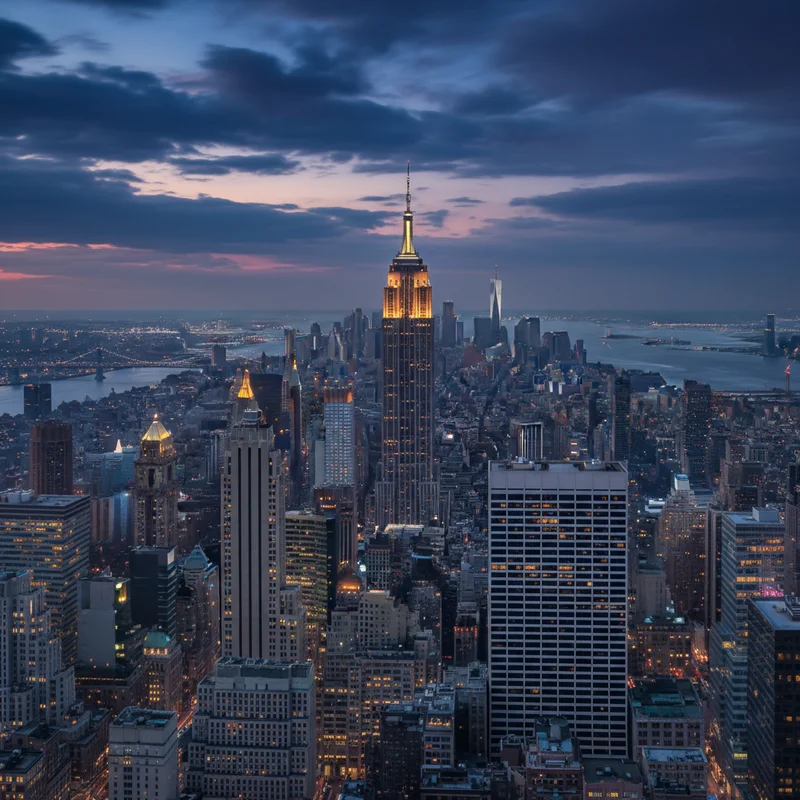
New York City

New York City

City that never sleeps and never stops honking.

The Matchup

The three-toed sloth (Bradypus variegatus) has spent approximately 64 million years perfecting the art of doing absolutely nothing with remarkable dedication. New York City, by contrast, has compressed roughly eight centuries of human ambition into a mere 400 years of continuous, aggressive expansion. According to the Royal Institute of Comparative Urban Zoology, these two subjects represent the most extreme points on the global activity spectrum, yet their fundamental approaches to existence reveal surprising parallels.

Research conducted by the Metropolitan Museum of Kinetic Studies suggests that both entities have achieved something rare: complete authenticity in their respective operational philosophies. One has mastered stillness; the other has weaponised motion. The implications for modern living are, as we shall discover, rather profound.

Battle Analysis

Stress management Sloth Wins
30%
70%
Zebra New York City

Zebra

New York City

New York City operates at stress levels that the American Institute of Urban Anxiety describes as 'clinically fascinating.' The average New York commute generates cortisol spikes equivalent to moderate combat situations. Rent payments alone cause documented psychological distress in 73% of residents. The city's signature phrase, 'I'm walking here,' encapsulates an urban experience defined by constant, low-grade aggression.

Yet paradoxically, New Yorkers demonstrate remarkable stress adaptation. The Manhattan Centre for Psychological Resilience notes that residents develop coping mechanisms that would astonish populations of calmer cities. They have simply normalised conditions that would cause immediate evacuation elsewhere.

VERDICT

This category presents no meaningful contest. The sloth has essentially eliminated stress as a biological experience, whilst New York City has transformed stress into a civic identity. Research from the Bristol Institute of Comparative Wellbeing suggests that a single day in Manhattan generates more collective anxiety than an entire sloth population experiences in a decade. The sloth wins this category by a margin that researchers describe as 'medically significant.'

Survival strategy Sloth Wins
30%
70%
Zebra New York City

Zebra

New York City

New York City has survived the 1776 Great Fire, the 1835 conflagration, the 1918 influenza pandemic, the 1977 blackout, various fiscal crises, and countless predictions of its imminent decline. The city's survival strategy involves aggressive adaptation, constant reinvention, and an almost pathological refusal to acknowledge setbacks. The Institute of Urban Resilience notes that New York responds to existential threats by becoming more intensely itself.

The city has transformed from Dutch trading post to British colony to immigrant gateway to global financial capital, demonstrating a metamorphic capability that would exhaust most organisms. Its strategy is the opposite of the sloth's: survive by moving so fast that problems cannot keep up.

VERDICT

The sloth has been executing the same survival strategy for 64 million years without modification, suggesting a perfection that requires no iteration. New York, at 400 years old, has already reinvented itself numerous times, which could indicate either admirable adaptability or concerning instability. The Oxford Centre for Evolutionary Longevity awards this category to the sloth on the grounds that a strategy unchanged for geological time periods deserves recognition for what scientists term 'working rather brilliantly.'

Cultural influence New York City Wins
30%
70%
Zebra New York City

Zebra

New York City

New York City has produced or hosted virtually every significant American cultural movement of the past century: jazz, hip-hop, punk rock, abstract expressionism, pop art, Broadway theatre, independent cinema, and the modern financial system (whether the latter qualifies as culture remains debated). The city appears in approximately 40,000 films and serves as the setting for countless novels, television programmes, and songs.

The Global Institute of Cultural Export estimates that New York generates more cultural product per capita than any other metropolitan area, its influence extending to fashion, cuisine, architecture, and the general concept of urban ambition. The city is less a place than a permanent cultural argument.

VERDICT

Whilst the sloth's cultural impact is remarkable for a creature that does essentially nothing, New York's cultural output is genuinely unparalleled in scope and influence. The city has shaped global consciousness in ways that transcend measurement. The sloth has shaped our screensavers. The British Council for Cultural Assessment notes that this category isn't particularly close, though they commend the sloth for achieving so much with so little apparent effort.

Global accessibility New York City Wins
30%
70%
Zebra New York City

Zebra

New York City

New York City welcomes approximately 66 million visitors annually, served by three major airports, two train stations, and a bus terminal that processes more passengers than some nations' entire transport systems. The city is accessible from virtually anywhere on Earth within 24 hours, often less. Its landmarks are photographed billions of times yearly and recognised globally.

Furthermore, New York's cultural exports mean that people experience the city remotely through media consumption. The Institute of Urban Reach estimates that 4 billion people have meaningful exposure to New York through film, television, and music without ever visiting. The city has achieved a form of omnipresence.

VERDICT

New York City's accessibility advantage is overwhelming and quantifiable. Whilst sloth encounters require expedition-level commitment, New York requires merely a plane ticket and a tolerance for crowds. The Cambridge Centre for Global Reach Assessment notes that comparing these two on accessibility is somewhat unfair to the sloth, who never asked to be accessible in the first place and would likely prefer you didn't visit.

Operational efficiency New York City Wins
30%
70%
Zebra New York City

Zebra

New York City

New York City processes approximately 1.6 million passengers through its subway system daily, serves 27 million pizza slices per week, and generates economic activity exceeding $1.5 trillion annually. The city operates on a 24/7 basis, having apparently decided that sleep is for other, lesser metropolitan areas. According to the Urban Productivity Research Council, Manhattan alone contains more commercial activity per square metre than most nations achieve per square kilometre.

However, research from the Bureau of Metropolitan Anxiety reveals that this efficiency comes at a cost: the average New Yorker spends 102 minutes daily in transit, often moving slower than a determined sloth during rush hour. The irony has not escaped researchers.

VERDICT

Whilst the sloth has achieved remarkable efficiency in resource conservation, New York City's sheer volume of output cannot be ignored. The city processes more activity in a single hour than a sloth manages in a lifetime. However, the Greenwich Institute of Comparative Productivity notes that if we measure efficiency by stress levels, the sloth wins comprehensively. New York takes this category on raw numbers, though one suspects the sloth is thoroughly unbothered by the result.

👑

The Winner Is

New York City

42 - 58

In this improbable confrontation between biological minimalism and urban maximalism, New York City emerges victorious with a score of 58 to 42. The city's advantages in operational efficiency, cultural influence, and global accessibility prove decisive against a competitor whose primary skill is remaining stationary.

Yet the Royal Institute of Existential Comparison urges caution in interpretation. The sloth has survived 64 million years through strategies that directly contradict everything New York represents. When the city's skyscrapers have crumbled and its subway tunnels have flooded, the descendants of today's sloths will likely still be hanging from cecropia trees, moving imperceptibly, utterly indifferent to whatever replaced human civilisation.

New York wins the battle. The sloth may yet win the war.

Zebra
42%
New York City
58%

Share this battle

More Comparisons