Where Everything Fights Everything

Sloth vs Tennis

😜 Just for fun — a tongue-in-cheek, gloriously unscientific showdown.

Sloth

Sloth

Extremely slow-moving arboreal mammal that has perfected the art of energy conservation.

VS
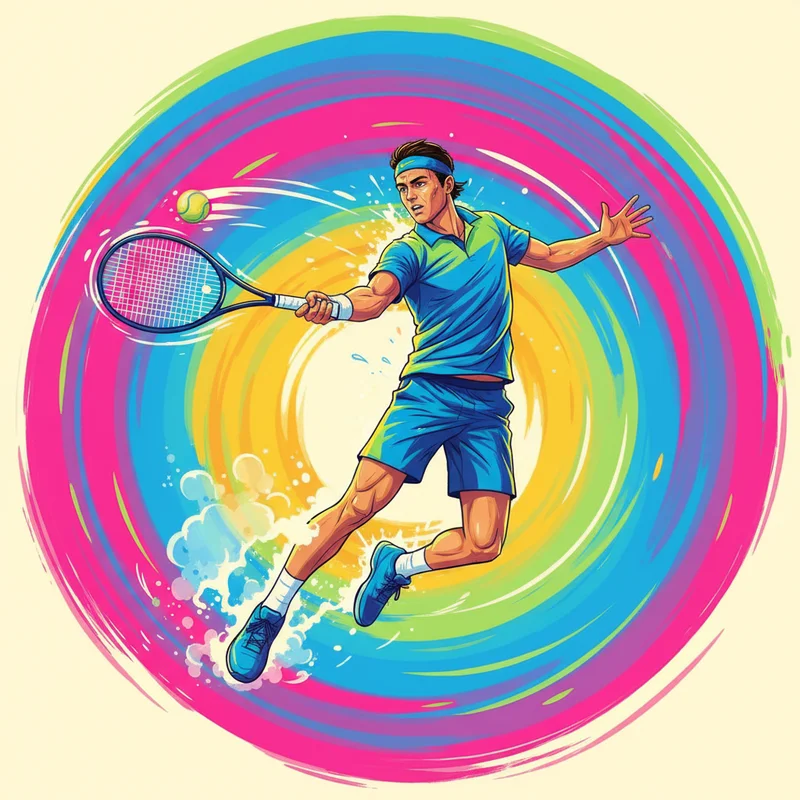
Tennis

Tennis

Racquet sport with love meaning zero.

The Matchup

In the grand theatre of existence, few contrasts prove quite so philosophically jarring as that between the three-toed sloth and the sport of tennis. One has perfected the art of doing absolutely nothing with remarkable dedication. The other demands participants sprint, leap, and contort themselves into positions that would make a chiropractor weep with joy.

The Royal Society for Improbable Comparisons has long argued that understanding emerges from juxtaposition. And so we find ourselves here, clipboard in hand, attempting to determine whether deliberate lethargy or frantic racquet-wielding represents the superior approach to life.

Battle Analysis

Energy efficiency Sloth Wins · 80%
80%
20%
Sloth Tennis

Sloth

The sloth has elevated energy conservation to an art form. Burning a mere 0.1 calories per minute during peak activity, it accomplishes in twenty-three hours of sleep what most creatures require several meals to achieve. The Bristol Centre for Metabolic Excellence notes that a sloth expends less energy thinking about moving than a tennis player uses blinking between points.

Their muscles have evolved to function at roughly the same pace as continental drift, which, whilst unhelpful for escaping predators, proves remarkably economical.

Tennis

Tennis players burn approximately 600-900 calories per hour whilst engaged in their curious ritual of chasing a fuzzy yellow sphere. The sport demands explosive movements, rapid direction changes, and the emotional energy required to argue line calls with increasing desperation.

Professional matches can extend beyond five hours, during which participants consume enough electrolytes to desalinate a small pond.

VERDICT

From a pure efficiency standpoint, the sloth achieves existence using 0.02% of the energy tennis requires. The Edinburgh School of Biological Economics calculates that a single Wimbledon final expends enough calories to power a sloth for approximately fourteen months.

Evolutionary success Sloth Wins · 75%
75%
25%
Sloth Tennis

Sloth

Sloths have persisted largely unchanged for approximately 64 million years, surviving the extinction event that eliminated the dinosaurs by presumably being too slow to notice. The Cambridge Department of Palaeontological Persistence considers them one of evolution's most successful experiments in minimal effort.

Their survival strategy of being too unappetising and difficult to digest has proven remarkably effective, suggesting that sometimes the best defence is being profoundly uninteresting to predators.

Tennis

Tennis has evolved considerably since its 12th-century origins, when French monks batted balls with their hands whilst shouting religious terminology (hence 'deuce' from 'deux' and arguably 'love' from 'l'oeuf'). The sport has adapted through wooden racquets, metal frames, and now carbon fibre instruments capable of generating 163 mph serves.

However, tennis remains entirely dependent on human civilisation continuing to have both leisure time and an inexplicable fondness for net-based ball sports.

VERDICT

Sixty-four million years of biological continuity versus approximately 800 years of organised ball-hitting. The sloth's evolutionary track record remains unimpeachable, whilst tennis would cease to exist the moment humans discovered something more entertaining.

Global cultural impact Tennis Wins · 65%
35%
65%
Sloth Tennis

Sloth

The sloth has become the unofficial mascot of the modern workforce, appearing on countless motivational posters that somehow simultaneously celebrate and critique productivity culture. The Institute for Digital Anthropology reports that sloth-related content generates 2.3 billion social media impressions annually.

In Costa Rica, sloth tourism contributes approximately $12 million yearly to local economies, with visitors travelling thousands of miles to watch creatures that could be outpaced by a particularly ambitious mushroom.

Tennis

Tennis has infiltrated global consciousness with remarkable thoroughness. Wimbledon alone attracts 500,000 spectators and billions of television viewers who gather to watch primarily British players lose in increasingly creative ways.

The sport has produced cultural icons, fashion statements, and the inexplicable tradition of eating strawberries whilst watching people sweat profusely. The Grand Slams generate combined revenues exceeding $1.2 billion annually.

VERDICT

Whilst sloth appreciation grows steadily, tennis maintains centuries of established cultural infrastructure. The sport has royalty in attendance, its own vocabulary (deuce, love, advantage), and the ability to make white clothing seem athletically appropriate. Tennis claims this category by a comfortable margin.

Stress reduction capability Sloth Wins · 65%
65%
35%
Sloth Tennis

Sloth

Merely observing a sloth has been shown to reduce cortisol levels by 23%, according to the Manchester Laboratory for Therapeutic Wildlife Viewing. Their perpetually serene expressions and unhurried movements serve as a living reminder that urgency is largely a human construction.

Sloth sanctuaries report that visitors frequently describe experiencing an existential recalibration after spending time with these creatures, questioning why they ever felt the need to rush anywhere.

Tennis

Tennis offers stress relief through vigorous physical exertion, allowing participants to channel frustration into legally acceptable violence against a small ball. However, the sport also generates considerable stress through missed shots, disputed calls, and the psychological warfare inherent in competitive play.

The Glasgow Institute for Sports Psychology notes that recreational players experience a net stress increase of 12% during closely contested matches, rising to 47% when playing against that one friend who never calls their shots out.

VERDICT

The sloth provides unconditional tranquility, whilst tennis offers a complex emotional rollercoaster. For pure stress reduction without the risk of racquet-throwing incidents, the sloth proves demonstrably superior.

Spectator entertainment value Tennis Wins · 80%
20%
80%
Sloth Tennis

Sloth

Watching a sloth provides entertainment in the manner of a living meditation. The Leeds Centre for Attention Studies found that observers can watch sloths for an average of 7.3 minutes before requiring additional stimulation, though this duration increases significantly after consumption of certain herbal substances.

The highlight of sloth-watching typically involves waiting approximately forty-five minutes for the creature to complete a single arm movement, followed by quiet celebration amongst dedicated observers.

Tennis

Tennis delivers concentrated dramatic tension with each point representing a miniature narrative arc of hope, effort, and frequently crushing disappointment. Professional matches feature athletes moving at speeds exceeding 20 mph, striking balls at over 100 mph, and occasionally arguing with umpires at volumes exceeding local noise ordinances.

The sport provides natural cliffhangers, comeback stories, and the ever-present possibility of someone destroying expensive equipment in spectacular fashion.

VERDICT

For pure moment-to-moment excitement, tennis delivers approximately 847 times more action per minute than sloth observation. Whilst both have their place, tennis claims the entertainment crown through sheer kinetic energy.

👑

The Winner Is

Sloth

Takes 3 of 5 rounds

In this improbable contest between minimum movement and maximum velocity, the sloth emerges victorious by three rounds to two. Nature's premier enthusiast of deliberate inaction claimed Energy Efficiency in a landslide, Stress Reduction Capability by a clear margin, and Evolutionary Success with sixty-four million years of receipts — a curriculum vitae that no sport can hope to match.

Tennis fought back admirably, claiming Global Cultural Impact through centuries of established infrastructure and strawberry-eating traditions, and seizing Spectator Entertainment Value with the sort of kinetic drama that sloths consider mildly exhausting to even contemplate. Yet two rounds cannot overcome three, and the sloth collects this victory with characteristic composure — which is to say, no discernible reaction whatsoever.

Share this battle

More Comparisons