
Topic Battle

Where Everything Fights Everything

Sonic

Sonic

Blue hedgehog with attitude and speed.

VS
Wolverine

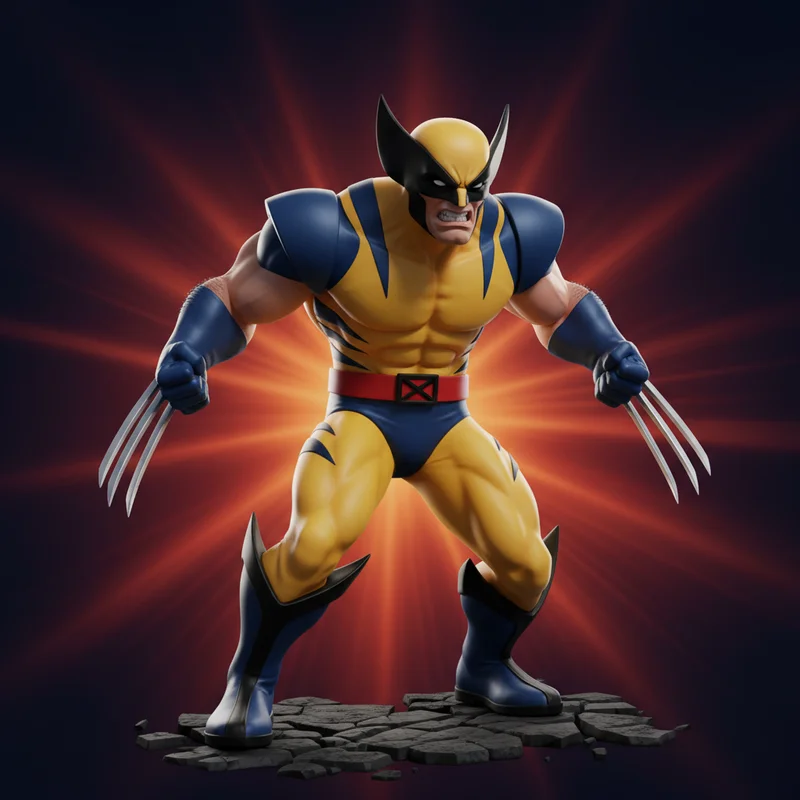
Wolverine

Clawed mutant with regeneration and anger issues.

Battle Analysis

Adaptability Wolverine Wins
30%
70%
Sonic Wolverine

Sonic

The hedgehog has demonstrated considerable franchise adaptability through various gameplay iterations. Racing games, fighting games, RPG elements, and even Olympic sporting events have been incorporated with varying success. His adaptation to 3D gaming environments proved notoriously challenging, resulting in several critically maligned titles. However, his recent cinematic transition suggests newfound flexibility, successfully translating to live-action environments after an infamous design controversy. Sonic adapts through corporate iteration, his character shaped by market demands and creative teams.

Wolverine

Wolverine's adaptability stems from biological necessity and accumulated experience. Two centuries of existence have required continuous adjustment to changing social, technological, and combat landscapes. He has operated as soldier, samurai, spy, and superhero, demonstrating psychological flexibility that exceeds mere physical resilience. His healing factor includes mental adaptation, enabling recovery from psychological trauma that would shatter ordinary minds. Unlike characters whose adaptations require external creative decisions, Logan's adaptability is intrinsic to his nature, evolving autonomously through lived experience.

VERDICT

Intrinsic biological and psychological adaptation surpasses externally mandated franchise evolution
Cultural reach Sonic Wins
70%
30%
Sonic Wolverine

Sonic

Sonic's cultural penetration spans over three decades of multimedia dominance. The franchise encompasses more than 100 video games, multiple animated series, two theatrical films grossing over $700 million combined, and merchandise adorning virtually every conceivable consumer product. His image became synonymous with the Sega Genesis era, representing an entire generation's gaming memories. The character's recent cinematic success demonstrates remarkable cultural elasticity, appealing simultaneously to nostalgic adults and newly initiated children. Recognition surveys consistently place him among the most identifiable video game characters globally.

Wolverine

The mutant's cultural trajectory required patient accumulation rather than immediate saturation. Introduced in 1974 as a relatively minor antagonist, Wolverine required over a decade to achieve X-Men prominence. The Hugh Jackman portrayal, spanning seventeen years and nine films, cemented his mainstream recognition. However, his penetration remains demographically stratified, achieving near-universal awareness among those aged 15-50 whilst showing significant decline among younger and older populations. His influence proves more qualitative than quantitative: he legitimised the anti-hero protagonist, reshaping subsequent entertainment narratives.

VERDICT

Thirty years of global multimedia saturation outpaces demographically limited superhero recognition
Speed and agility Sonic Wins
70%
30%
Sonic Wolverine

Sonic

SEGA's documentation establishes Sonic's velocity at a staggering 767 miles per hour, precisely matching the speed of sound at sea level. His Super Sonic form, achieved through the collection of Chaos Emeralds, approaches speeds that defy measurement, with some sources suggesting near-light velocity. The hedgehog's figure-eight running technique generates extraordinary momentum, enabling feats such as running across water and up vertical surfaces without apparent effort. His agility permits instantaneous directional changes at these velocities, suggesting either impossible physics or remarkably advanced proprioception.

Wolverine

Logan's movement capabilities, whilst impressive by human standards, remain firmly within biological parameters. His enhanced mutant physiology permits speeds of approximately 30 miles per hour in sustained pursuit, with burst speeds somewhat higher. However, the 105 pounds of adamantium bonded to his skeleton imposes significant locomotion costs. His agility reflects over a century of martial training rather than supernatural enhancement, demonstrating the accumulated wisdom of countless combat encounters rather than innate speed. When Wolverine moves quickly, it is through tactical precision rather than raw velocity.

VERDICT

Supersonic velocity versus enhanced human speed creates an insurmountable differential
Combat effectiveness Wolverine Wins
30%
70%
Sonic Wolverine

Sonic

Sonic's combat methodology relies upon momentum-based attacks, transforming his velocity into offensive capability. The spin dash and homing attack enable him to dispatch mechanical adversaries through kinetic impact. His speed provides tactical evasion capabilities that render most attacks ineffective. However, his offensive options remain somewhat one-dimensional, lacking the variety that extended combat scenarios demand. Against opponents immune to blunt trauma or capable of sustained engagement, his strategic options narrow considerably. His psychological approach to conflict favours speed over sustained confrontation.

Wolverine

Logan represents arguably the most dangerous close-quarters combatant in the Marvel universe. His adamantium claws can bisect virtually any material, whilst over a century of martial training has exposed him to every fighting discipline humanity has developed. The berserker rage state suppresses higher cognitive function in favour of pure predatory instinct, dramatically increasing lethality. His healing factor permits learning through failure without permanent consequence, enabling combat education impossible for mortal fighters. He has defeated opponents ranging from street-level criminals to cosmic-tier threats.

VERDICT

Century of lethal combat experience and adamantium weaponry surpass momentum-based attacks
Regeneration and durability Wolverine Wins
30%
70%
Sonic Wolverine

Sonic

The hedgehog's survival mechanism operates through SEGA's ring-based health system, wherein collected golden rings provide protection against damage. Upon sustaining injury, Sonic scatters his accumulated rings but survives to continue his journey. This system provides conditional immortality, dependent entirely upon resource availability. Without rings, a single strike proves fatal. The mechanism suggests that Sonic's inherent durability remains essentially that of an ordinary hedgehog, which is to say, rather limited. His survival stems from environmental advantages rather than biological resilience.

Wolverine

Wolverine's regenerative capabilities represent perhaps the most documented healing factor in comic book literature. His mutant physiology enables recovery from injuries that would prove instantly fatal to ordinary beings, including complete tissue regeneration, organ reconstruction, and neurological repair. Logan has survived nuclear explosions, drowning, and reduction to skeletal remains. His adamantium skeleton provides structural invulnerability to impacts that would shatter ordinary bone. This biological miracle has preserved his life across nearly two centuries, granting effective immortality whilst maintaining peak physical condition.

VERDICT

Biological regeneration from near-complete destruction surpasses ring-dependent conditional survival
👑

The Winner Is

Wolverine

45 - 55

This examination reveals a contest between fundamentally different forms of excellence. Sonic claims decisive victory in speed and cultural reach, his supersonic velocity and global brand recognition representing achievements that Wolverine cannot match. Yet the mutant's dominance in regeneration, combat effectiveness, and adaptability reflects capabilities that extend beyond entertainment into genuine survival advantages.

The final calculation favours Wolverine at 55% to Sonic's 45%, a margin reflecting the mutant's more comprehensive capability set. Whilst Sonic can outrun virtually anything, Wolverine can outlast virtually anything, and in the calculus of long-term success, durability often proves more valuable than velocity.

Both figures, however, share a crucial quality: they redefined their respective mediums. Sonic proved video games could compete with cinema for cultural attention; Wolverine demonstrated that morally complex anti-heroes could anchor billion-dollar franchises.

Sonic
45%
Wolverine
55%

Share this battle

More Comparisons