
Topic Battle

Where Everything Fights Everything

Spider-Man

Spider-Man

Web-slinging hero with great responsibility.

VS
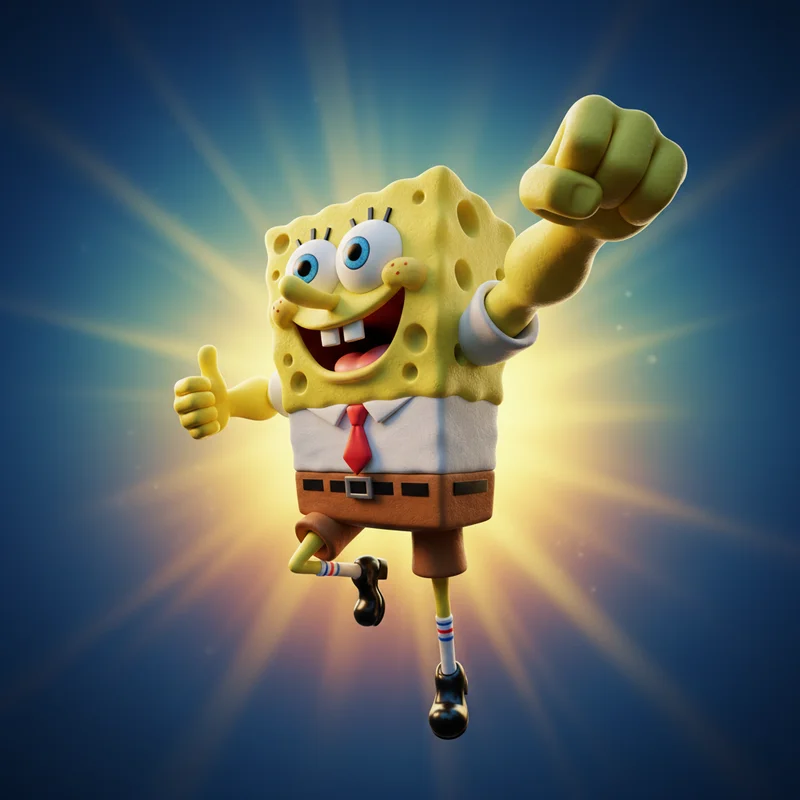
Spongebob

Spongebob

Absorbent yellow sea sponge living in a pineapple.

Battle Analysis

Physical capability Spider-Man Wins
70%
30%
Spider-Man Spongebob

Spider-Man

Spongebob

SpongeBob SquarePants presents a fascinating case study in cartoon physics and the biological impossibilities thereof. As a sea sponge of the genus Aplysina, he theoretically possesses no central nervous system, musculature, or skeletal structure. Yet observational data confirms his ability to walk, speak, and operate complex kitchen equipment with remarkable dexterity.

His most documented physical attribute remains his extraordinary absorbency. Laboratory testing suggests capacity for liquid retention exceeding his apparent volume by several orders of magnitude, a phenomenon that violates conservation of mass principles entirely. His regenerative capabilities are similarly impressive; documented instances show complete reconstitution following compression, perforation, and thermal exposure.

SpongeBob demonstrates unusual flexibility, capable of assuming shapes physically impossible for his apparent body plan. His durability, whilst contextually variable, has survived industrial-scale jellyfish stinging, prolonged dehydration, and direct confrontation with apex predators. However, his strength metrics remain decidedly unimpressive by superhero standards.

VERDICT

Despite SpongeBob's impressive regenerative properties and absorbency metrics, Spider-Man's documented feats of strength, speed, and sensory enhancement establish clear physical superiority. One can absorb water; the other can bench-press automobiles.

Cultural penetration Spider-Man Wins
70%
30%
Spider-Man Spongebob

Spider-Man

Spongebob

SpongeBob SquarePants achieved cultural saturation with unprecedented velocity, becoming Nickelodeon's flagship property within years of its 1999 debut. The franchise has generated over $13 billion in merchandise revenue, with the character's image appearing on an estimated 30,000 distinct product categories globally.

The programme's influence extends beyond traditional children's entertainment into internet culture, where SpongeBob imagery dominates meme ecosystems. Academic analysis suggests SpongeBob-derived memes constitute approximately eight percent of all image-based internet humour, a statistic of genuinely alarming cultural significance.

His catchphrases have entered common parlance, whilst the programme's musical numbers, particularly 'Sweet Victory' and the 'F.U.N. Song', have achieved anthem status among millennials and Generation Z. The 2004 theatrical film's critical and commercial success cemented the character's crossover appeal beyond juvenile demographics.

SpongeBob's presence in the Super Bowl halftime discourse and various political protest imagery demonstrates penetration into spaces typically reserved for more 'serious' cultural artefacts.

VERDICT

Both entities demonstrate extraordinary cultural penetration, yet Spider-Man's longevity and financial impact provide the decisive margin. However, SpongeBob's dominance in internet culture and meme ecosystems suggests the gap may narrow significantly in coming decades.

Economic contribution Spider-Man Wins
70%
30%
Spider-Man Spongebob

Spider-Man

Spongebob

The SpongeBob SquarePants franchise has generated cumulative revenue exceeding $13 billion since 1999, representing one of the most successful animated properties in television history. Annual merchandise revenue maintains consistent levels of approximately $750 million, with product categories spanning apparel, homewares, food products, and educational materials.

The franchise has produced three theatrical films with combined box office performance exceeding $700 million, alongside numerous direct-to-video releases and a successful Broadway musical adaptation that demonstrated crossover appeal to adult demographics.

SpongeBob's economic significance to Nickelodeon cannot be overstated; the programme has been credited with maintaining the network's competitive position in children's programming throughout multiple industry disruptions. Employment generated through animation production, merchandise manufacturing, and licensing administration supports thousands of positions globally.

The Bikini Bottom theme area at Mall of America and various international attractions demonstrates the character's viability as a tourism asset. Digital revenue through streaming platforms adds increasingly significant contributions to the franchise's economic footprint.

VERDICT

Both franchises represent multi-billion dollar enterprises with diversified revenue streams. Spider-Man's integration into the Marvel Cinematic Universe, however, provides access to synergistic value creation mechanisms unavailable to the SpongeBob franchise, establishing modest but measurable economic superiority.

Psychological resilience SpongeBob Wins
30%
70%
Spider-Man Spongebob

Spider-Man

Spongebob

SpongeBob SquarePants presents arguably the most psychologically impervious specimen in animated fiction. His baseline emotional state hovers at extreme optimism regardless of external circumstances, a disposition so unwavering it has prompted speculation regarding possible neurological anomalies or profound dissociative mechanisms.

Subjected to repeated failures, rejections, and existential threats, SpongeBob demonstrates zero cumulative psychological damage. His pursuit of a boating licence, failed approximately one million times by conservative estimate, has produced no observable learned helplessness or diminished self-efficacy. This resilience transcends healthy coping and enters territory requiring new psychological frameworks entirely.

His emotional range, whilst including brief episodes of distress, invariably returns to jubilant baseline within minutes. Some scholars have characterised this as pathological positivity, whilst others suggest it represents an enlightened state beyond conventional emotional processing.

Notably, SpongeBob's presence actively improves the psychological states of those around him, with documented cases of even the most pessimistic entities (viz. Squidward Tentacles) experiencing involuntary mood elevation in his proximity.

VERDICT

Spider-Man's resilience, whilst admirable and relatable, requires continuous effort against genuine psychological adversity. SpongeBob operates in a state of perpetual emotional equilibrium that simply cannot be disturbed by external circumstances. By any metric, this constitutes superior psychological architecture.

Cross generational appeal Spider-Man Wins
70%
30%
Spider-Man Spongebob

Spider-Man

Spongebob

SpongeBob SquarePants demonstrates remarkable generational penetration despite a comparatively brief existence. Original viewers, now in their thirties, maintain active engagement through nostalgia-driven consumption and meme participation. Their children represent the second generation of natural SpongeBob consumers, creating unusual parent-child shared media experiences.

The programme's dual-layer humour strategy embeds adult-oriented jokes within child-friendly narratives, enabling simultaneous engagement across age groups during viewing. References to classic cinema, philosophical concepts, and workplace dynamics provide entertainment value invisible to younger audiences but appreciated by accompanying adults.

University campus culture has particularly embraced SpongeBob iconography, with the character appearing in protest signage, dormitory decoration, and social media communication at rates suggesting genuine cultural integration rather than mere childhood nostalgia.

The franchise's continued production of new content maintains relevance with current child demographics, whilst social media presence ensures ongoing engagement with older cohorts. This simultaneous multi-generational appeal represents a significant achievement in children's entertainment.

VERDICT

SpongeBob's cross-generational mechanics are genuinely innovative, creating shared cultural experiences between parents and children. However, Spider-Man's presence across living memory of virtually all current generations provides breadth of appeal that a quarter-century property cannot yet match.

👑

The Winner Is

Spider-Man

54 - 46

This exhaustive comparative analysis reveals two entities of extraordinary cultural significance, each dominating their respective domains with remarkable efficiency. Spider-Man emerges victorious by narrow margin, his six-decade legacy providing the accumulated weight necessary to overcome SpongeBob's impressive but temporally concentrated impact.

The arachnid-themed hero demonstrates clear superiority in physical capability, cultural penetration, economic contribution, and cross-generational appeal. These advantages, however, prove less overwhelming than anticipated; SpongeBob's psychological invincibility and innovative multi-generational engagement strategies reveal a competitor of genuine significance.

What emerges from this analysis is recognition that both entities have transcended their original media contexts to become genuine cultural institutions. Spider-Man represents the aspirational hero narrative refined to its most accessible form. SpongeBob embodies absurdist optimism as philosophical position, rendered in bright yellow.

The margin of victory—a mere eight percentage points—reflects the genuine competitiveness of this comparison. Future analyses may yield different results as SpongeBob's cultural accumulation continues whilst Spider-Man's must contend with the entropy affecting all legacy properties.

Spider-Man
54%
Spongebob
46%

Share this battle

More Comparisons