
Topic Battle

Where Everything Fights Everything

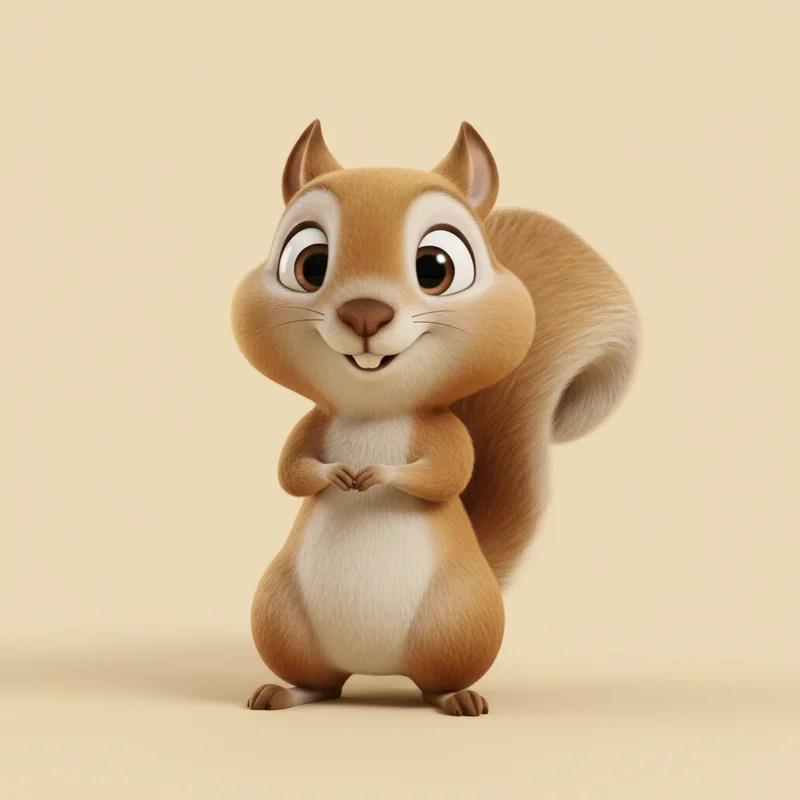
Squirrel

Squirrel

Acrobatic rodent obsessed with nut collection, featuring impressive jumping skills and bushy tail.

VS
Death

Death

The only certainty in life besides taxes.

Battle Analysis

Persistence death Wins
30%
70%
Squirrel Death

Squirrel

The squirrel's persistence manifests primarily in its relationship with food storage. A single grey squirrel may cache up to 10,000 nuts annually, each buried in a separate location across territories spanning several hectares. This behaviour, known as scatter hoarding, demonstrates a commitment to future planning that borders on the pathological.

However, squirrel memory proves imperfect. Studies indicate that squirrels fail to recover approximately 74 percent of their cached nuts, inadvertently becoming one of nature's most prolific tree planters. This represents persistence undermined by fundamental competence issues. The squirrel tries remarkably hard, invests considerable effort, yet achieves only partial results. One might characterise this as enthusiastic inefficiency.

Death

Death's persistence operates on an entirely different scale of commitment. Having commenced operations approximately 3.8 billion years ago with the emergence of the first living organisms, death has never taken a holiday, never experienced staff shortages, and never once failed to follow through on a scheduled appointment. This represents a track record of absolute persistence unmatched in the natural world.

Where squirrels occasionally forget their caches, death forgets nothing. Every organism that has ever lived has been processed through death's systems with 100 percent efficiency. The estimated 117 billion humans who have ever existed have each received death's personal attention, alongside quadrillions of other creatures. This is not mere persistence; it is persistence elevated to cosmic law.

VERDICT

Death maintains 3.8 billion years of perfect attendance; squirrels forget 74% of their own nut caches.
Cultural impact death Wins
30%
70%
Squirrel Death

Squirrel

The squirrel occupies a peculiar position in human culture—ubiquitous yet rarely elevated to symbolic significance. Beatrix Potter's Squirrel Nutkin achieved literary immortality, whilst the animated squirrel Scrat's acorn obsession in the Ice Age franchise generated $3.2 billion in box office revenue. The phrase "squirreling away" has entered common parlance to describe hoarding behaviour.

Yet squirrels lack the cultural gravitas of lions, eagles, or even owls. No nation has adopted the squirrel as its primary emblem. No religion venerates squirrel deities. The creature's association with frantic energy and erratic behaviour has limited its symbolic utility to contexts involving nervous activity or scattered attention, a rather niche cultural portfolio.

Death

Death's cultural impact spans the entirety of human artistic and philosophical achievement. The figure of the Grim Reaper alone has generated countless artistic representations, from medieval woodcuts to contemporary cinema. Death appears as a character in works ranging from Terry Pratchett's Discworld series to Ingmar Bergman's The Seventh Seal, typically portrayed with more dignity than squirrels receive.

Every major religious tradition addresses death as a central theological concern. Philosophy's most enduring questions—the nature of consciousness, the meaning of existence, the possibility of afterlife—derive their urgency from mortality's certainty. The architectural and artistic legacy of death—pyramids, mausoleums, memorial gardens—represents some of humanity's most ambitious creative endeavours. Squirrels, by comparison, have inspired primarily garden ornaments and humorous internet videos.

VERDICT

Death has shaped religion, philosophy, art, and architecture for millennia; squirrels primarily inspire garden ornaments.
Unpredictability squirrel Wins
70%
30%
Squirrel Death

Squirrel

The squirrel's behaviour demonstrates a level of unpredictability that has frustrated naturalists and motorists for centuries. Their road-crossing strategy—dart forward, stop, reverse, dart forward again—appears specifically designed to maximise collision probability. Studies indicate squirrel movements follow patterns best described as stochastic chaos.

This unpredictability extends to their social behaviour. Squirrels may share food caches with relatives one moment and engage in violent territorial disputes the next. Their seasonal activity patterns shift based on variables including temperature, food availability, and factors that remain entirely mysterious to scientific observation. Even experienced wildlife researchers describe squirrel behaviour as genuinely baffling.

Death

Death's unpredictability operates on a different register entirely. Whilst death's eventual occurrence is absolutely predictable—indeed, guaranteed—its timing remains fundamentally uncertain. Actuarial tables provide statistical probabilities, yet individual cases routinely confound expectations. Healthy individuals perish unexpectedly; terminal patients survive decades beyond prognosis.

This combination of certain outcome and uncertain timing creates a unique psychological impact that squirrel behaviour simply cannot match. One may anticipate a squirrel's general vicinity without predicting its specific movements; one may anticipate death's certainty without predicting its specific arrival. Both frustrate planning, but death's unpredictability carries rather more significant consequences.

VERDICT

Squirrel behaviour achieves genuine moment-to-moment chaos; death's timing, whilst uncertain, follows actuarial patterns.
Speed and agility squirrel Wins
70%
30%
Squirrel Death

Squirrel

The squirrel's locomotive capabilities represent a triumph of evolutionary engineering. The eastern grey squirrel achieves ground speeds of 20 miles per hour, whilst its arboreal movements border on the supernatural. Squirrels can rotate their hind ankles 180 degrees, allowing descent of trees headfirst—a biomechanical feat that would require most mammals to visit orthopaedic specialists.

Their reaction times measure approximately 50 milliseconds, enabling split-second directional changes that frustrate predators and motorists alike. The ability to leap distances exceeding 10 feet horizontally and drop 100 feet vertically without injury suggests that squirrels have achieved a working relationship with physics that other species might envy. This represents genuine agility of the highest order.

Death

Death's approach to speed presents interesting paradoxes. In certain circumstances—cardiac arrest, catastrophic trauma—death arrives with remarkable swiftness, completing its work within seconds to minutes. The transition from life to death can occur faster than a squirrel can cross a motorway, which, given squirrel road-crossing statistics, presents relevant data.

Yet death also demonstrates infinite patience. It may approach gradually over decades, through the slow accumulation of cellular damage known as senescence. This temporal flexibility—instantaneous when required, glacially patient when preferred—represents a form of strategic velocity rather than mere speed. Death need not chase; it simply waits at every possible destination.

VERDICT

Squirrels achieve 20 mph ground speeds and 180-degree ankle rotation; death's speed varies but requires no physical pursuit.
Global distribution death Wins
30%
70%
Squirrel Death

Squirrel

Squirrels have achieved considerable geographic success, inhabiting forests, urban parks, and suburban gardens across five continents. The grey squirrel's invasion of the United Kingdom, displacing the native red squirrel across 90 percent of England and Wales, demonstrates concerning competence in territorial expansion.

However, significant gaps remain in squirrel distribution. Antarctica, Australia, and large portions of the Sahara and Arabian deserts remain squirrel-free zones. This represents approximately 25 percent of Earth's landmass beyond squirrel influence. Additionally, marine environments—covering 71 percent of the planet—have proven entirely resistant to squirrel colonisation, despite the creatures' otherwise impressive adaptability.

Death

Death's distribution achieves what cartographers might term complete coverage. It operates in every ecosystem, from the Mariana Trench to the summit of Everest, from equatorial rainforests to polar ice caps. No geographic location has ever been declared a death-free zone, though several have attempted to market themselves as longevity destinations with limited credibility.

The marine environment, so inhospitable to squirrels, teems with death's activity. Deep ocean thermal vents, where temperatures exceed 400 degrees Celsius, still witness organism deaths. Even the International Space Station, orbiting 408 kilometres above Earth's surface, falls within death's operational jurisdiction, as demonstrated by various unfortunate experiments involving small organisms.

VERDICT

Death operates across 100% of Earth's surface and beyond; squirrels have failed to colonise oceans, deserts, or Antarctica.
👑

The Winner Is

Death

38 - 62

This comparative analysis reveals a contest between fundamentally asymmetric forces. The squirrel excels in categories requiring physical capability—achieving victory in speed and agility, where its 180-degree ankle rotation and 20 mph sprints demonstrate genuine evolutionary achievement, and in moment-to-moment unpredictability, where its road-crossing algorithms baffle even sophisticated observers.

Yet death dominates in categories reflecting scope and significance. Its persistence across 3.8 billion years, its complete global distribution including environments hostile to all squirrel activity, and its profound cultural impact across every human civilisation represent advantages that no amount of acrobatic prowess can overcome.

The philosophical implications merit reflection. Squirrels embody life's frenetic energy—the constant motion, the hoarding against uncertain futures, the inexplicable decisions that somehow perpetuate the species. Death represents the boundary condition against which all such activity occurs. Every squirrel, despite its impressive speed and agility, will eventually encounter death and lose that particular encounter decisively.

By a margin of 62 to 38 percent, death claims this comparative victory. The squirrel fought admirably, bringing genuine athletic credentials and commendable persistence to the contest. But death plays an undefeated game across geological time. The squirrel may run faster, leap higher, and confuse observers more thoroughly—but it runs, leaps, and confuses within boundaries that death ultimately defines. Meanwhile, somewhere in a park, a squirrel has already forgotten where this paragraph was going. Death, characteristically, has not.

Squirrel
38%
Death
62%

Share this battle

More Comparisons