
Topic Battle

Where Everything Fights Everything

Tea

Tea

A traditional beverage made from steeping processed leaves of the Camellia sinensis plant in hot water. Enjoyed by billions worldwide.

VS
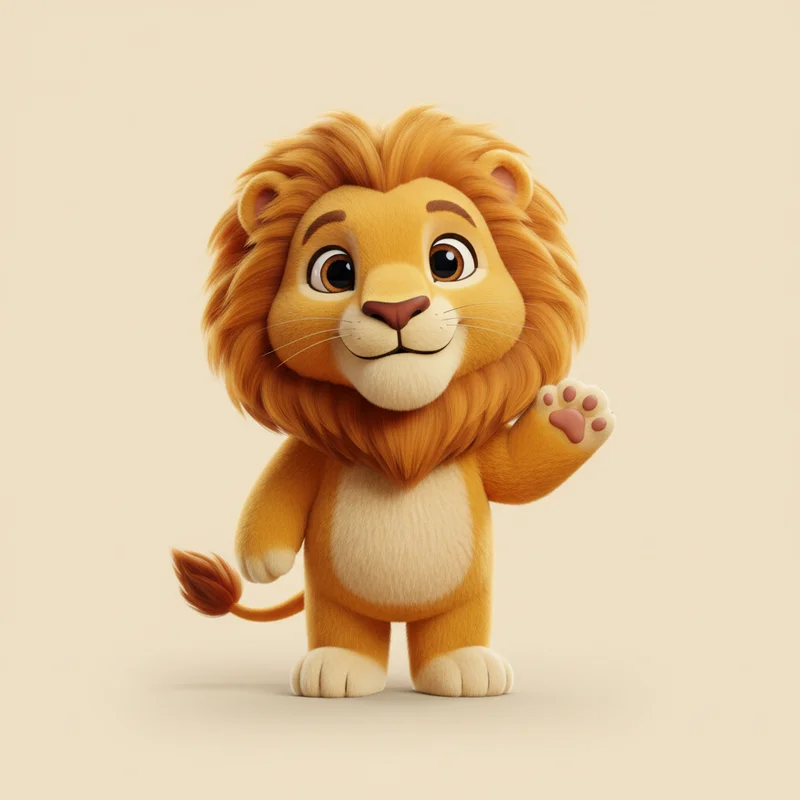
Lion

Lion

Apex predator and king of the savanna, known for majestic manes and surprisingly lazy daytime habits.

Battle Analysis

Cultural impact tea Wins
70%
30%
Tea Lion

Tea

Tea has generated entire philosophical frameworks and artistic traditions. The Japanese concept of ichi-go ichi-e emerged from tea ceremony practice. Chinese tea culture influenced Chan Buddhism's development. The British afternoon tea ritual restructured daily schedules across social classes. Tea gardens became sites of political organisation, literary exchange, and romantic courtship. Teaware represents significant ceramic art traditions spanning millennia. Tea has not merely entered cultures; it has fundamentally altered how humans structure time, space, and social interaction.

Lion

The lion's cultural impact operates primarily through metaphor and heraldic tradition. As symbol of courage, nobility, and power, lions appear across literature from Aesop to C.S. Lewis. The MGM lion has introduced thousands of films. Sports teams worldwide adopt leonine mascots. Yet this represents humans borrowing lion imagery rather than lions actively shaping human behaviour. No one has restructured their workday around lion observation. The lion inspires; it does not transform daily practice. Its cultural role is referential rather than participatory.

VERDICT

Tea restructured human daily rituals; lions serve as passive symbols
Global dominance tea Wins
70%
30%
Tea Lion

Tea

Tea maintains an unbroken presence in 159 countries, with consumption rates exceeding 6.3 billion kilograms annually. From the ceremonial tea houses of Kyoto to the roadside chai stalls of Mumbai, from British drawing rooms to Moroccan riads, tea has established territorial control that no military force has ever achieved. The British Empire's expansion was fundamentally motivated by tea acquisition, resulting in the colonisation of India, the Opium Wars with China, and the reorganisation of global shipping routes. Tea did not merely accompany empire; tea demanded empire.

Lion

The lion's historical range once extended from southern Europe through the Middle East to the Indian subcontinent. Today, wild populations exist only in sub-Saharan Africa and a single forest in Gujarat. This represents a territorial contraction of approximately 94 percent over two millennia. Lions have never established presence in the Americas, Australia, or Antarctica. They require specific savanna ecosystems with adequate prey density, limiting their adaptive range. Where tea has expanded relentlessly, the lion has retreated with each passing century, confined increasingly to protected reserves under human management.

VERDICT

Tea occupies 159 nations; lions have contracted to 8% of their historical range
Intimidation factor lion Wins
30%
70%
Tea Lion

Tea

Tea's intimidation operates through social coercion rather than physical threat. The refusal of offered tea carries severe diplomatic consequences across numerous cultures. In Britain, declining tea signals fundamental untrustworthiness. In the Middle East, such refusal constitutes grave insult to hospitality. Japanese tea ceremony violations can terminate business relationships permanently. Tea enforces compliance through shame, obligation, and the weaponisation of politeness. Those who do not conform find themselves excluded from power structures that have governed commerce and diplomacy for centuries.

Lion

The lion possesses physical intimidation credentials beyond dispute. A bite force of 650 pounds per square inch can crush bone. Claws extending four centimetres can disembowel prey with single swipes. The roar, audible from eight kilometres distant, triggers primal fear responses in virtually all mammals, including humans. Lions have killed an estimated 250 people annually in Tanzania alone during peak conflict years. This is raw, immediate, visceral intimidation requiring no cultural interpretation. The fear is biological, not learned.

VERDICT

Biological terror response to apex predators cannot be matched by social pressure
Survival resilience tea Wins
70%
30%
Tea Lion

Tea

Tea cultivation has survived and expanded through every historical catastrophe. World wars disrupted supply chains temporarily but never eliminated consumption. Climate change is shifting viable growing regions rather than eliminating them. Tea plants demonstrate remarkable adaptability, thriving from sea level to 2,500 metres elevation, across tropical and temperate zones. The industry employs over 13 million workers globally, creating economic dependencies that ensure continued cultivation. Human civilisation would need to collapse entirely before tea production ceased.

Lion

Lion populations face existential threat within the current century. Habitat loss, human-wildlife conflict, trophy hunting, and prey base depletion have reduced numbers by 43 percent in just two decades. Climate change will further reduce viable habitat. Without intensive conservation intervention, wild lions may become functionally extinct by 2050. The species' survival depends entirely upon human policy decisions and protected area management. Lions are not surviving; they are being permitted to exist, a status that could be revoked at any moment.

VERDICT

Tea expands globally whilst lion populations face potential extinction by 2050
Historical significance tea Wins
70%
30%
Tea Lion

Tea

Tea has directly precipitated three major wars and countless political upheavals. The Boston Tea Party catalysed American independence. The Opium Wars reshaped Asian geopolitics for two centuries. The Indian tea industry's labour demands influenced partition demographics. Tea taxation policies have toppled governments. The East India Company, history's most powerful corporation, existed primarily as a tea logistics operation. No other beverage has so consistently redirected the course of human civilisation. Coffee and wine have their adherents; neither has redrawn national borders.

Lion

Lions appear in the oldest known human artistic expressions, including the Chauvet Cave paintings dating to 32,000 BCE. They feature prominently in the mythologies of ancient Egypt, Mesopotamia, Greece, and India. The Nemean Lion became Heracles' first labour. The Sphinx guards Egyptian tombs. Lions adorn the national symbols of England, Ethiopia, Sri Lanka, and numerous other nations. Richard I earned his sobriquet through leonine association. Yet this significance is largely symbolic and retrospective, reflecting human projection rather than active historical agency.

VERDICT

Tea actively shaped history through economics and conflict; lions inspired symbols
👑

The Winner Is

Tea

55 - 45

This analysis reveals a fundamental asymmetry in the nature of power. The lion commands through visible might: teeth, claws, muscle, and roar. This power is immediate, visceral, and undeniable. Yet it is also finite, localised, and increasingly vulnerable. Tea operates through subtler mechanisms: ritual, addiction, trade dependency, and social obligation. Its power is distributed, self-perpetuating, and effectively invisible to those under its influence. The lion can kill an individual; tea has restructured civilisations. By every metric of territorial control, historical agency, and long-term survival probability, the dried leaf has outperformed the apex predator. The final score of 55-45 reflects tea's comprehensive systemic dominance whilst acknowledging the lion's unmatched capacity for direct physical intimidation.

Tea
55%
Lion
45%

Share this battle

More Comparisons