
Topic Battle

Where Everything Fights Everything

Tea

Tea

A traditional beverage made from steeping processed leaves of the Camellia sinensis plant in hot water. Enjoyed by billions worldwide.

VS
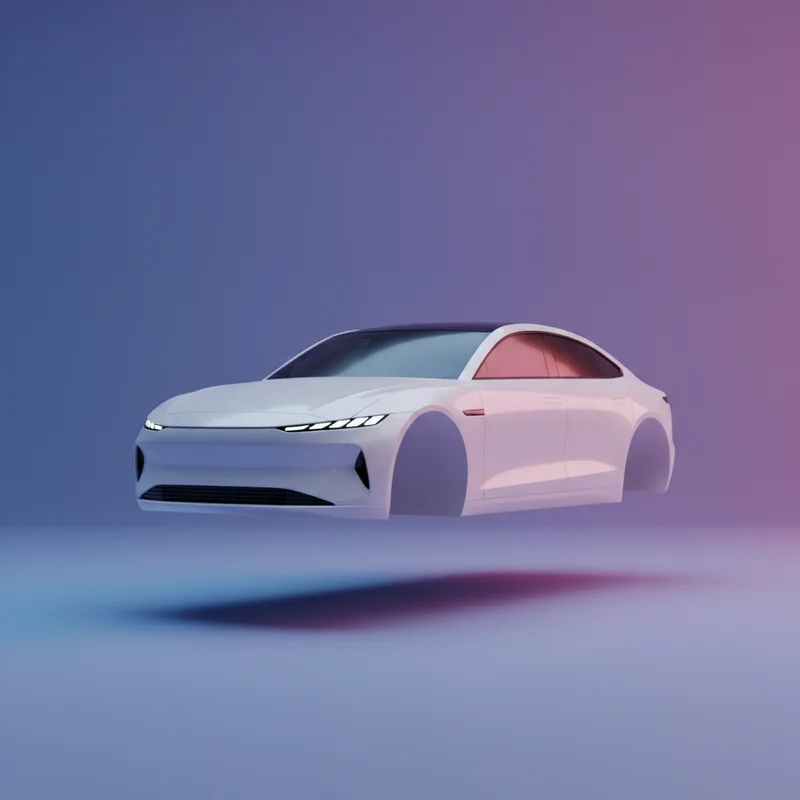
Tesla

Tesla

Electric vehicle manufacturer disrupting the automotive industry.

Battle Analysis

Global reach tea Wins
70%
30%
Tea Tesla

Tea

The Camellia sinensis plant has achieved what military strategists only dream of: complete global penetration without firing a single shot. From the misty highlands of Darjeeling to the windswept steppes of Mongolia, tea has established itself as the universal solvent of human interaction. An estimated 3.7 billion cups are consumed daily across every inhabited continent. The beverage transcends economic boundaries with remarkable efficiency; a factory worker in Guangzhou and a duchess in Hampshire both pause their days for its restorative properties. Tea requires no proprietary charging network, no software updates, and functions identically whether consumed in poverty or abundance.

Tesla

Tesla's global ambitions, whilst impressive, remain constrained by the infrastructure of modernity. The company operates in approximately 40 countries, though meaningful market penetration exists primarily in North America, Europe, and China. Each vehicle sold requires a supporting ecosystem of charging stations, trained technicians, and reliable electricity grids—luxuries unavailable to much of humanity. The Supercharger network, whilst expanding, covers mere corridors of the developed world. In regions where 1.2 billion people lack consistent electricity access, Tesla represents not transportation but aspiration, a symbol visible yet permanently out of reach.

VERDICT

Tea operates in every nation without infrastructure requirements; Tesla remains confined to electrified corridors of wealth.
Cost efficiency tea Wins
70%
30%
Tea Tesla

Tea

The economics of tea consumption border on the miraculous. A single kilogram of quality loose-leaf tea produces approximately 400 cups, placing the per-serving cost below most municipal water rates. Even accounting for heating costs, a cup of tea represents one of the most affordable legal stimulants available to humanity. The equipment required—kettle, vessel, strainer—totals under twenty pounds and lasts decades with minimal maintenance. Tea's democratising effect on caffeine access has arguably contributed more to worker productivity than any management theory, providing alertness to those who could never afford coffee's higher price point.

Tesla

Tesla ownership requires financial commitment that excludes the vast majority of global consumers. The entry-level Model 3 commands approximately $40,000 in most markets, whilst the Model S and X exceed $80,000. Total cost of ownership analyses, factoring reduced fuel and maintenance expenses, show parity with luxury combustion vehicles over 5-7 years—assuming no battery degradation or replacement costs. Home charging installation adds $1,000-3,000 to initial outlay. Insurance premiums exceed comparable combustion vehicles by 15-25% due to repair complexity. Tesla ownership signals disposable income rather than frugality.

VERDICT

Tea provides stimulation for pennies; Tesla requires five-figure investment and ongoing infrastructure costs.
Innovation legacy tesla Wins
30%
70%
Tea Tesla

Tea

Tea's innovative contributions to human civilisation extend far beyond the beverage itself. The British East India Company, built substantially on tea trade, pioneered the joint-stock corporation model that underpins modern capitalism. Tea clipper ships drove advances in naval architecture, whilst the quest for tea spawned industrial espionage operations that established Assam and Ceylon as growing regions. The tea bag, invented accidentally in 1908, represents one of the most successful packaging innovations in food history. Tea ceremonies in Japan codified aesthetic principles that influenced architecture, pottery, and garden design for centuries.

Tesla

Tesla's innovation portfolio has fundamentally rewritten automotive industry assumptions. The company proved electric vehicles could deliver performance exceeding combustion equivalents, demolishing decades of scepticism. Tesla's battery technology advances have reduced costs by 87% since 2010, making renewable energy storage economically viable. The over-the-air update model transformed automobiles from static purchases to evolving platforms. Autopilot development, despite controversies, accelerated industry-wide autonomous driving investment. Perhaps most significantly, Tesla's success forced established manufacturers to electrify their lineups decades ahead of previous projections.

VERDICT

Tesla compressed transportation's transition to electric by decades; tea's innovations occurred across millennia.
Environmental impact tesla Wins
30%
70%
Tea Tesla

Tea

Tea cultivation presents a complex environmental ledger. Traditional shade-grown methods support biodiversity, with tea gardens often serving as corridors for wildlife between forest fragments. The plant itself is a perennial, preventing the annual soil disturbance of row crops. However, industrial tea production has driven deforestation across suitable growing regions, whilst pesticide use in conventional farming contaminates waterways. The beverage's carbon footprint remains remarkably modest: approximately 21 grams of CO2 per cup when prepared with electric kettle power. Packaging waste from tea bags and plastic wrapping represents the primary environmental concern in developed markets.

Tesla

Tesla positions itself as environmental salvation, yet the full lifecycle analysis reveals uncomfortable truths. Battery production requires lithium extraction from Chilean salt flats and cobalt mining in the Democratic Republic of Congo—processes that devastate local ecosystems and exploit human labour. A single Tesla battery contains approximately 8 kilograms of lithium and 14 kilograms of cobalt. The manufacturing carbon debt requires 50,000-80,000 kilometres of driving before a Tesla achieves net environmental benefit over efficient combustion vehicles. Yet in operation, electric vehicles eliminate tailpipe emissions in urban environments where air quality most impacts human health.

VERDICT

Despite manufacturing concerns, Tesla's operational emissions advantage addresses urban air quality crisis more urgently than tea.
Cultural significance tea Wins
70%
30%
Tea Tesla

Tea

Tea has woven itself into the foundational narratives of civilisations with extraordinary thoroughness. The Boston Tea Party catalysed American independence; British identity remains inseparable from the ritual of elevenses. Japanese tea ceremony, or chado, represents a philosophical system encompassing hospitality, aesthetics, and spiritual practice. In China, tea houses served as the public squares where news spread and deals concluded. The phrase 'not my cup of tea' has entered English as metaphor. Tea breaks structured industrial labour, humanising factory work. From Russian samovars to Moroccan mint tea, each culture has adapted the leaf to express its values.

Tesla

Tesla has achieved cultural penetration remarkable for a company barely two decades old. The brand symbolises technological optimism, environmental consciousness, and Silicon Valley disruption mythology. Elon Musk's celebrity has rendered Tesla inseparable from debates about billionaire influence, space exploration, and social media conduct. Tesla ownership serves as identity signifier among certain demographics, communicating values as effectively as clothing or dietary choices. The company has spawned devoted communities, YouTube channels, and investment cults. Yet this cultural presence remains concentrated among wealthy, technologically-engaged populations in developed nations.

VERDICT

Tea shaped revolutions, identities, and daily rituals across all cultures; Tesla's influence remains demographically narrow.
👑

The Winner Is

Tea

55 - 45

This investigation reveals a confrontation between proven permanence and promising potential. Tesla represents humanity's necessary pivot toward sustainable transportation, accelerating an inevitable transition with remarkable engineering and market disruption. Yet the company remains fundamentally a luxury goods manufacturer whose environmental benefits require decades to materialise and infrastructure that excludes most of humanity. Tea, by contrast, has already achieved what Tesla aspires to: universal accessibility, minimal resource requirements, and integration into the daily rhythms of billions. The leaf asks nothing but hot water; the vehicle demands rare minerals, charging networks, and substantial capital. In the calculus of demonstrated impact versus projected promise, the ancient must prevail over the aspirational. Final score: Tea 55, Tesla 45.

Tea
55%
Tesla
45%

Share this battle

More Comparisons