Topic Battle

Where Everything Fights Everything

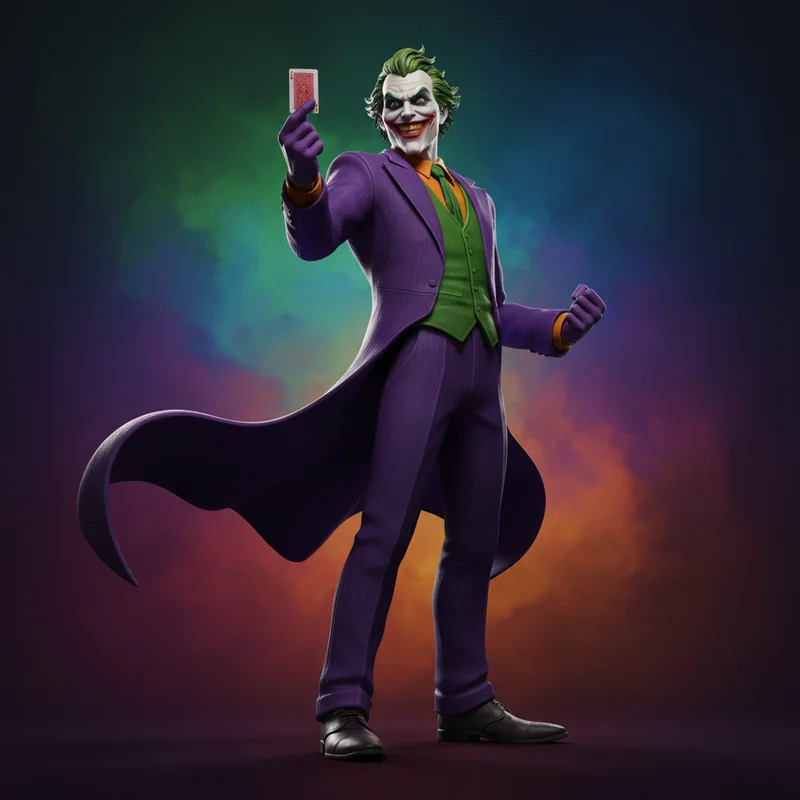
The Joker

The Joker

Chaos-loving clown prince of crime.

VS
Time

Time

Dimension that refuses to slow down when needed.

Battle Analysis

Cultural impact Time Wins
30%
70%
The Joker Time

The Joker

Since his debut in Batman #1 (1940), the Joker has become perhaps the most recognisable villain in popular culture. His image appears across merchandise, memes, and sociopolitical commentary worldwide. Multiple film interpretations have grossed over $2 billion collectively. The character transcends his comic origins to function as a cultural symbol representing rebellion against societal order. His laugh echoes through generations of storytelling.

Time

Time's cultural impact defies measurement, having shaped every civilisation's fundamental structures. Calendars, clocks, and schedules form the skeleton of human organisation. The concept of time has driven philosophical traditions from Heraclitus to Heidegger. Religions structure themselves around temporal narratives of creation and apocalypse. Time is not merely a cultural influence but the medium through which all culture propagates and persists.

VERDICT

Time structures all cultural production, whilst the Joker remains a product of culture rather than its foundation.
Unpredictability The Joker Wins
70%
30%
The Joker Time

The Joker

The Joker's unpredictability constitutes his defining characteristic. His schemes defy rational analysis, shifting from elaborate criminal enterprises to spontaneous acts of violence without discernible pattern. Psychological profiles have proven useless; even Batman, with his considerable detective skills, cannot anticipate the Joker's next move. This chaotic nature extends to his own henchmen, who face elimination as readily as his enemies. His unpredictability is a philosophy rather than mere behaviour.

Time

Time operates with clockwork predictability that borders on the tedious. One second follows another with mathematical precision; seasons rotate according to orbital mechanics; atomic clocks maintain accuracy to one second per 300 million years. Yet time harbours subtle unpredictabilities in relativistic effects and quantum uncertainties. Einstein demonstrated that time itself warps around massive objects, though such effects remain deterministic rather than chaotic.

VERDICT

The Joker's chaos is genuine and deliberate, whilst time's variations follow deterministic physical laws.
Symbolic resonance The Joker Wins
70%
30%
The Joker Time

The Joker

The Joker functions as modernity's most potent symbol of chaos and social dissolution. He represents the fragility of civilised order, the arbitrary nature of morality, and the darkness lurking beneath society's veneer. His appeal spans political spectrums, appropriated by anarchists and authoritarians alike. The character has achieved mythological status, embodying the trickster archetype for contemporary audiences.

Time

Time symbolises the fundamental constraint upon all existence. It represents mortality, change, opportunity, and loss simultaneously. Every memento mori, every countdown, every historical commemoration invokes time's symbolic weight. Yet time's very ubiquity diminishes its symbolic power; one does not notice the medium in which one swims. Time is too universal to serve as pointed metaphor.

VERDICT

The Joker's symbolic specificity enables more powerful metaphorical use than time's diffuse universality.
Resistance potential Time Wins
30%
70%
The Joker Time

The Joker

Defeating the Joker proves remarkably difficult yet demonstrably possible. Batman has thwarted his schemes hundreds of times across decades of continuity. Arkham Asylum, despite its porous security, occasionally contains him. Bullets, explosives, and sufficient force can neutralise his physical threat, though his ideological influence proves more resilient. He can be stopped, if only temporarily, by determined opposition and superior resources.

Time

Resistance to time remains fundamentally impossible by any known means. Relativistic effects can dilate time but never halt or reverse it. The second law of thermodynamics ensures entropy's unidirectional march. Cryogenic preservation merely pauses biological processes whilst time continues unabated. No technology, magic, or force of will has ever stopped a single second from becoming the past. Time accepts no negotiations and acknowledges no adversary.

VERDICT

The Joker can be defeated repeatedly, whereas time has never been stopped by any force in the known universe.
Psychological influence Time Wins
30%
70%
The Joker Time

The Joker

The Joker's psychological impact extends beyond Gotham's fictional streets into global cultural consciousness. Three Academy Award-winning performances attest to his dramatic weight. His philosophy of chaos has spawned countless analyses and interpretations. The character's exploration of the thin line between sanity and madness resonates with audiences who recognise something unsettlingly familiar in his worldview. His influence operates primarily through entertainment rather than lived experience.

Time

Time's psychological influence permeates every waking moment of conscious existence. Chronophobia drives the multi-billion-pound anti-ageing industry; mid-life crises reshape careers and families; death anxiety shadows every birthday celebration. Time creates the very framework within which all psychological phenomena occur. Its influence is not watched but inhabited, not observed but endured moment by inescapable moment.

VERDICT

Time's psychological weight is lived rather than watched, affecting every conscious being rather than merely audiences.
👑

The Winner Is

Time

46 - 54

In this contest between gleeful chaos and universal constant, Time emerges victorious with a score of 54 to the Joker's 46. The margin reflects genuine competitive tension between radically different forms of power. Time's advantages lie in its inescapable universality, its psychological omnipresence, and its absolute resistance to all opposition.

The Joker, however, claims significant victories in unpredictability and symbolic resonance. His chaos represents something that time's mechanical precision cannot replicate: meaningful disorder. Time passes identically for all; the Joker reminds us that identical moments can contain vastly different experiences.

Perhaps the most telling observation is that the Joker himself would find this result hilarious. Victory and defeat are constructs he delights in subverting, whilst time merely continues, indifferent to scoreboards.

The Joker
46%
Time
54%

Share this battle

More Comparisons