Topic Battle

Where Everything Fights Everything

The Moon

The Moon

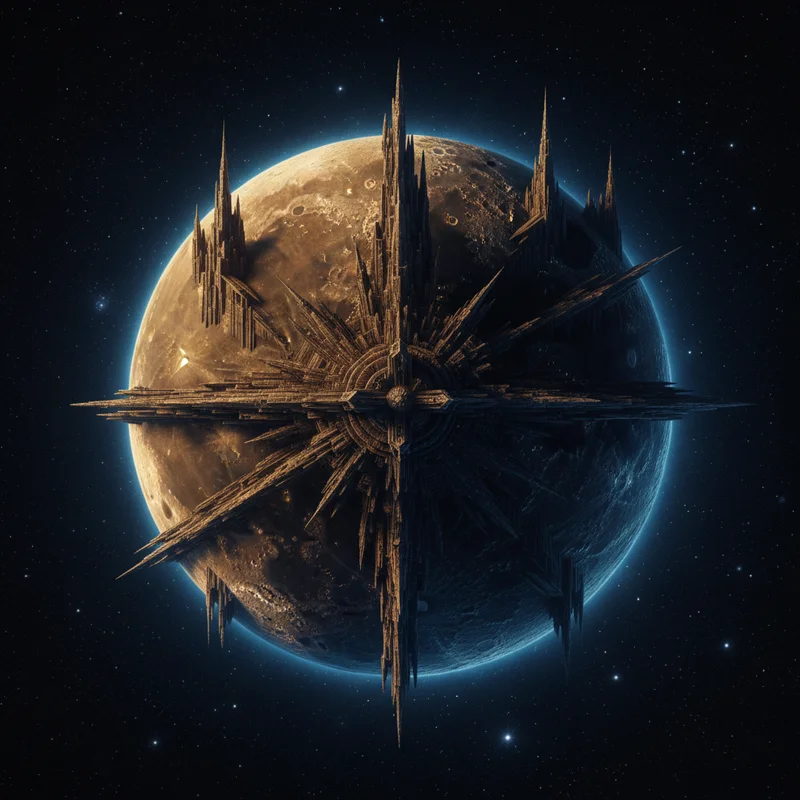
Earth's natural satellite and space race destination.

VS
Thor

Thor

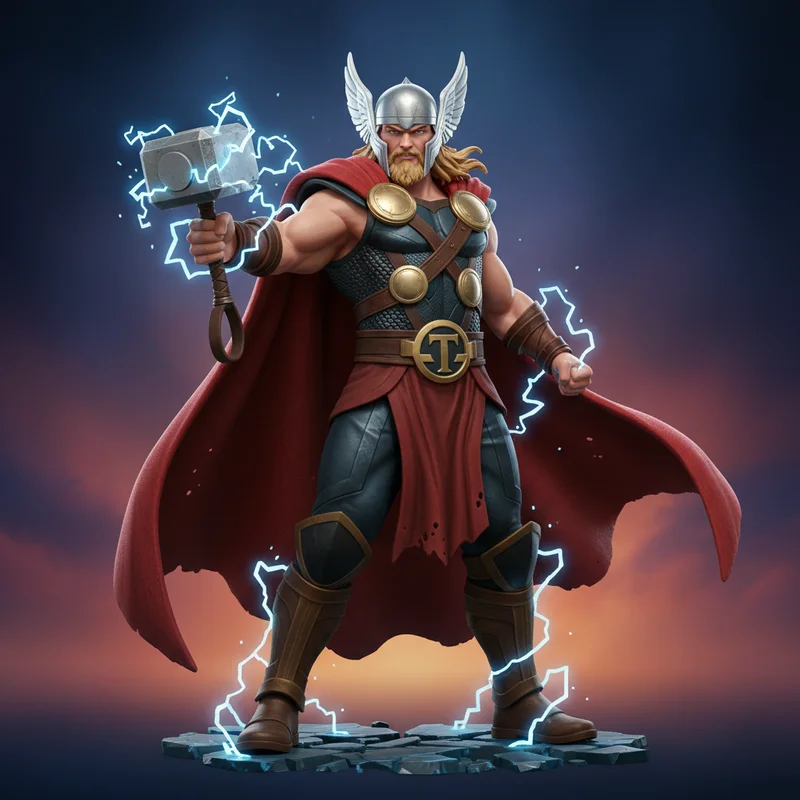
Norse god of thunder wielding Mjolnir.

Battle Analysis

Raw power Thor Wins
30%
70%
The Moon Thor

The Moon

The Moon's power operates through sheer gravitational mathematics. Moving 735 trillion trillion kilograms of rock through space, it displaces billions of tonnes of ocean water twice daily without apparent effort. The energy required to form the Moon likely exceeded 100 million megatons of TNT, whilst its continued orbital mechanics involve forces that dwarf any weapon humanity has conceived. Yet this power remains entirely passive, incapable of being directed or concentrated. The Moon cannot choose its targets; it simply exists, magnificently and influentially, but without volition.

Thor

The God of Thunder wields power sufficient to challenge cosmic entities and shatter planets. Thor has channelled the full output of a dying star, generated lightning bolts exceeding a billion volts, and demonstrated strength capable of moving celestial objects through direct application of force. His power responds to emotional state and conscious direction, scalable from gentle to apocalyptic as circumstances require. Unlike the Moon's passive influence, Thor's power is weaponised intent, capable of being focused, amplified, and deliberately aimed at specific problems requiring explosive resolution.

VERDICT

Directed divine power outmatches passive gravitational influence when measuring combat-applicable force.
Influence on earth The Moon Wins
70%
30%
The Moon Thor

The Moon

The Moon's influence upon Earth constitutes nothing less than planetary life support. Its gravitational pull generates tides that circulate ocean nutrients, stabilises Earth's axial tilt preventing catastrophic climate oscillation, and may have catalysed the very emergence of life through tidal pool chemistry. Without the Moon, Earth's day would last merely six hours, winds would exceed 200 kilometres per hour, and the wobbling axis would render seasons chaotic beyond agricultural adaptation. Every creature drawing breath on this planet owes its existence, in part, to this grey companion.

Thor

Thor's influence upon Earth, whilst dramatically impressive, proves considerably more selective. His interventions tend toward the spectacular but localised: repelling alien invasions, defeating frost giants, and occasionally devastating urban infrastructure during enthusiastic combat. The Asgardian prince protects Earth from extraterrestrial threats, yet billions of humans live and die entirely unaffected by his activities. His influence operates through crisis intervention rather than constant presence, making him rather like an extremely powerful emergency service with limited availability and considerable collateral damage.

VERDICT

The Moon enables Earth's habitability; Thor merely protects it during occasional dramatic incidents.
Cultural significance The Moon Wins
70%
30%
The Moon Thor

The Moon

The Moon has shaped human culture since consciousness emerged. Every civilisation has incorporated lunar cycles into calendars, religions, and agricultural practices. The word 'month' derives from 'moon'; the word 'lunatic' from Luna. Humanity's greatest technological achievement involved reaching the Moon's surface, an endeavour that united global attention as perhaps nothing else has. The Moon features in thousands of poems, countless paintings, and virtually every mythology ever conceived. It represents romance, madness, cycles, and humanity's aspirational nature simultaneously.

Thor

Thor's cultural impact spans from ancient Norse worship through medieval Christianity's attempts at suppression to Marvel's modern cinematic dominance. Thursday bears his name across Germanic languages. His films have generated over four billion dollars, introducing Norse mythology to generations who might otherwise never encounter it. Thor bridges ancient religion and contemporary entertainment, yet his modern popularity depends substantially upon corporate franchise management rather than organic cultural evolution. The thunder god is significant, but manufactured significance differs from earned reverence.

VERDICT

Universal, millennia-spanning cultural significance outweighs even successful franchise mythology.
Longevity and endurance The Moon Wins
70%
30%
The Moon Thor

The Moon

The Moon has endured for 4.5 billion years and shows every indication of continuing for billions more. It has witnessed the formation of Earth's continents, the emergence and extinction of countless species, and will observe humanity's eventual departure from the cosmic stage with the same serene indifference it has always maintained. The Moon does not age in any meaningful sense; it simply persists, slowly drifting away at 3.8 centimetres annually, eventually to witness our sun's transformation into a red giant and the solar system's ultimate dissolution.

Thor

Asgardian lifespans extend to approximately 5,000 years, making Thor practically immortal by human standards yet distinctly mortal by cosmic ones. Thor has died and been resurrected, survived Ragnarok, and demonstrated remarkable durability against forces that would obliterate lesser beings. Yet his existence depends upon biological continuation; he can be wounded, exhausted, and theoretically slain. The God of Thunder measures his existence in millennia whilst the Moon measures its own in aeons, a rather humbling disparity for any god.

VERDICT

Four and a half billion years of existence rather outperforms even Asgardian longevity.
Reliability and dependability The Moon Wins
70%
30%
The Moon Thor

The Moon

The Moon rises with clockwork predictability, its phases calculable centuries in advance with mathematical precision. Tides arrive on schedule; eclipses occur precisely when astronomers predict. The Moon has never failed to appear, never taken sabbatical, and never required motivation or compensation for its services. This reliability enabled ancient navigation, modern satellite communication, and continues to govern biological rhythms across countless species. One might set not merely watches but entire civilisations by the Moon's unwavering performance.

Thor

Thor's reliability proves considerably more variable. The Asgardian has abandoned Earth during personal crises, arrived late to critical battles, and occasionally created problems requiring subsequent resolution. His emotional state influences his effectiveness, with depression notably reducing his combat capability during extended periods. Thor means well and ultimately delivers, but his performance involves dramatic variability, personal struggles, and the occasional need for motivational intervention from teammates. One cannot schedule civilisations around Thor's availability.

VERDICT

Billions of years of perfect attendance versus an emotionally variable god with availability issues.
👑

The Winner Is

The Moon

58 - 42

This cosmic confrontation illuminates a fundamental truth: presence often matters more than power. The Moon, lacking consciousness or the ability to wield a hammer, nevertheless proves more essential to Earth than any god. Thor can save Earth from invasion; the Moon makes Earth worth saving.

The score of 58 to 42 reflects this reality. Thor's power cannot overcome the Moon's foundational importance and patient endurance across billions of years. The God of Thunder makes excellent cinema; the Moon makes life possible. Yet Thor represents humanity's aspiration toward heroic agency. The Moon exists; Thor chooses to protect.

The Moon
58%
Thor
42%

Share this battle

More Comparisons