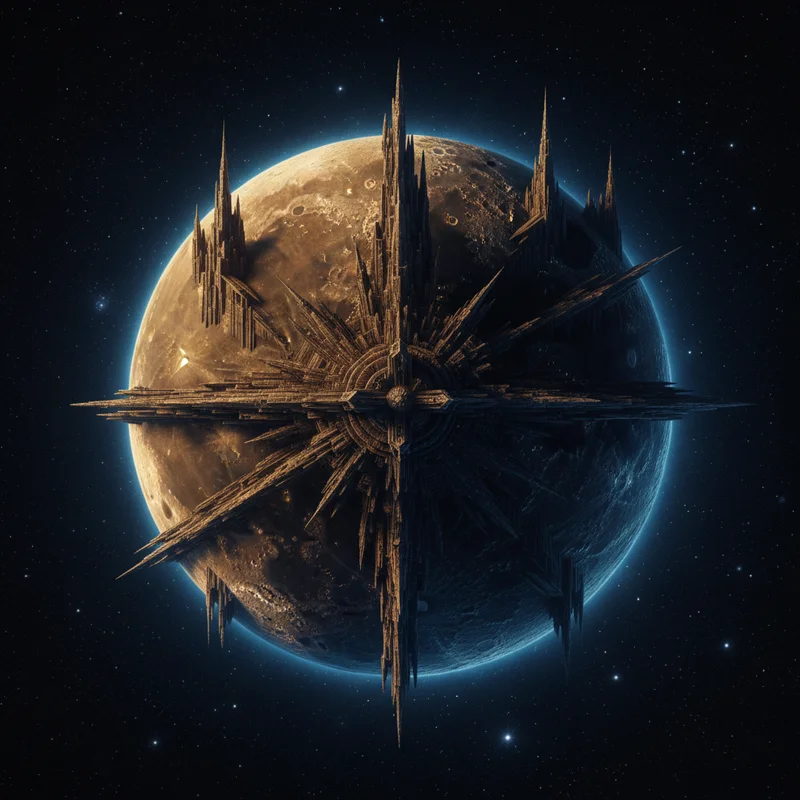

The Moon
The Moon's power operates through gravitational subtlety rather than thermal violence. Its tidal forces move billions of tonnes of water across Earth's oceans twice daily, generating enough friction to slow Earth's rotation by 1.4 milliseconds per century. Tidal forces are gradually pushing the Moon away from Earth at 3.8 centimetres annually. The Moon's formation, likely from a Mars-sized impactor striking proto-Earth, released energy sufficient to liquefy both bodies. Yet this primordial violence has settled into gravitational politeness, power expressed through eternal patience rather than explosive spectacle.
Volcano
Volcanic power favours the immediate and spectacular. Krakatoa's 1883 eruption generated the loudest sound in recorded history, audible 4,800 kilometres distant. The explosion's atmospheric shockwave circled Earth seven times. Mount Tambora ejected 160 cubic kilometres of material in 1815, lowering global temperatures by 0.7 degrees Celsius. Supervolcanic eruptions could potentially threaten civilisation: Yellowstone's last major eruption covered half of North America in ash. When volcanoes express displeasure, the notification arrives with considerable urgency.