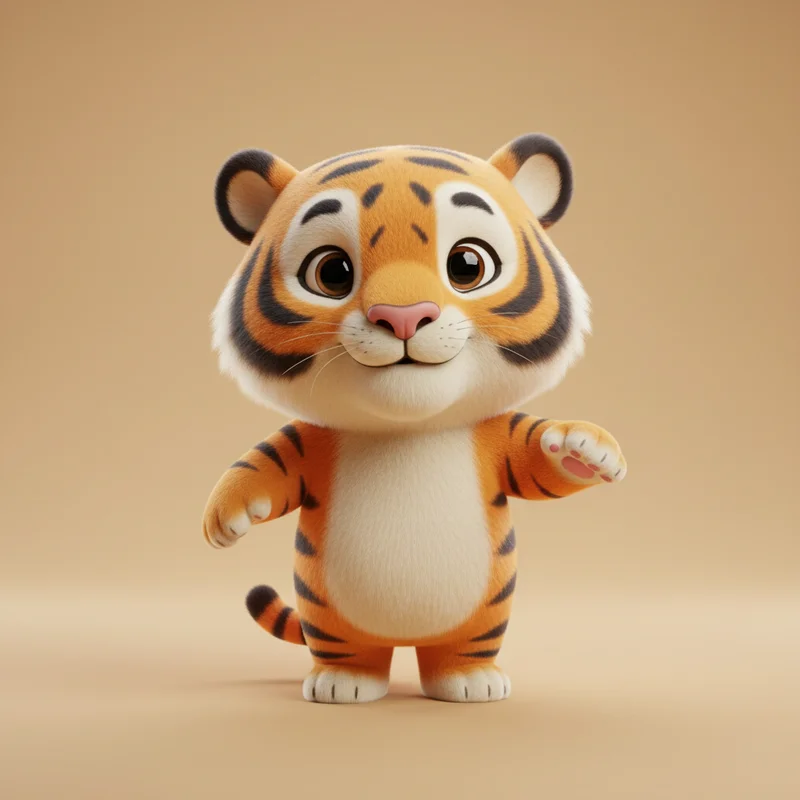

Tiger
Tigers have adapted to environments ranging from Siberian permafrost to Sundarbans mangroves, adjusting their hunting strategies, coat thickness, and prey selection across drastically different ecosystems. The Vladivostok Institute of Large Cat Studies tracked one Amur tiger that modified its territorial range by four hundred kilometres in response to declining prey populations—a decision made without consulting any external database whatsoever.
This adaptability developed over millennia through the rather brutal process of those who failed to adapt being eaten by something else. The survivors carry in their DNA the accumulated wisdom of ten thousand generations of successful problem-solving.
Artificial Intelligence
AI adapts at speeds that make evolution look like a particularly bureaucratic planning committee. Transfer learning allows a system trained on cat photographs to recognise tigers within hours. The Cambridge Computational Adaptation Centre demonstrated an AI that learned to play chess, then pivoted to protein folding, then to predicting traffic patterns—all before a tiger could finish digesting a single meal.
Yet this adaptability comes with a crucial caveat: AI adapts only within parameters humans have defined. When researchers at Imperial College's Edge Case Laboratory presented an image recognition system with a tiger wearing a hat, the system confidently identified it as a lamp. The tiger, presumably, would have identified the researcher as lunch regardless of headwear.
VERDICT
The Leeds Centre for Practical Intelligence concludes that speed of adaptation matters less than robustness of adaptation. AI can learn faster but fails catastrophically when conditions shift outside training parameters. Tigers learn slower but their learning survives encounters with genuine novelty. The stripes take this round.