
Topic Battle

Where Everything Fights Everything

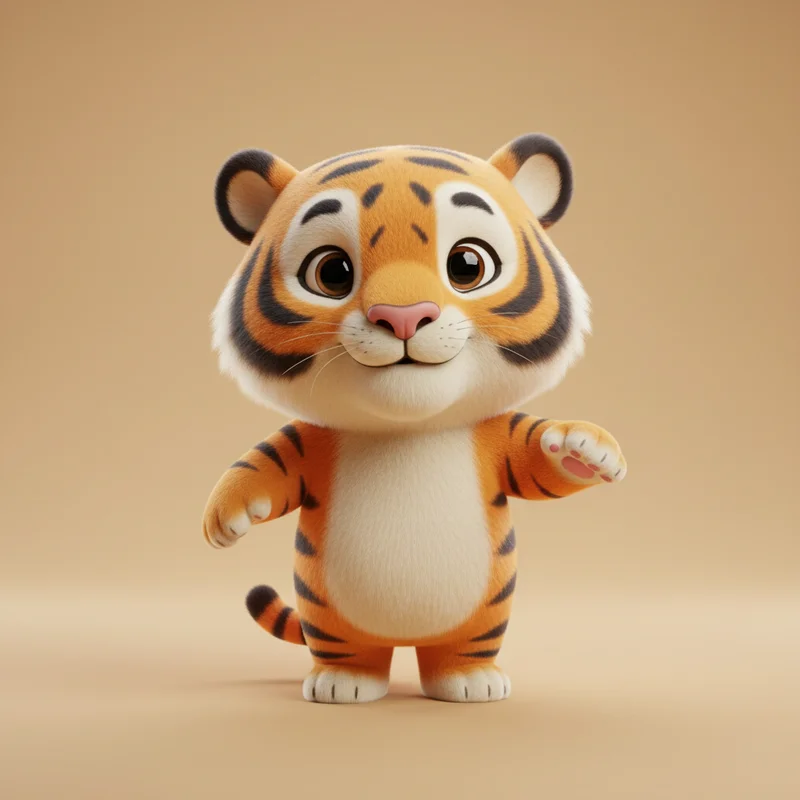
Tiger

Tiger

Largest wild cat species featuring distinctive stripes and solitary hunting prowess across Asian forests.

VS
Money

Money

Abstract concept that runs the world.

The Matchup

The tiger, Panthera tigris, has ruled the jungles of Asia for approximately two million years. Money, in its various forms, has dominated human civilisation for a mere four thousand. Yet according to the Royal Society for Abstract Versus Tangible Phenomena, the question of which wields greater influence remains surprisingly contested. Both command immediate attention. Both can fundamentally alter the trajectory of a life in seconds. And both, as the Edinburgh Centre for Existential Comparisons notes, tend to disappear precisely when you need them most.

Battle Analysis

Adaptability Money Wins
30%
70%
Tiger Money

Tiger

The tiger has adapted to environments ranging from Siberian tundra to tropical mangroves. The Sundarbans tiger swims between islands; the Amur tiger survives temperatures of minus forty degrees. This represents remarkable evolutionary flexibility developed over millennia.

Yet the tiger cannot adapt to the modern world's most challenging environment: human civilisation. Urban tigers do not exist. Suburban tigers represent catastrophic failures of containment rather than successful adaptation. The species remains fundamentally incompatible with the dominant ecosystem on Earth.

Money

Money demonstrates supernatural adaptability. Beginning as cattle and shells, it has transformed into coins, paper, electronic signals, and now cryptocurrency. The Rotterdam School of Monetary Evolution documents over 3,000 distinct forms money has taken across human history.

Money adapts not merely to physical environments but to conceptual ones. It functions equally well in socialist and capitalist systems, in wartime and peace, in agricultural and information economies. Money survived the fall of Rome, the Black Death, two world wars, and the 2008 financial crisis. It will likely outlast the tiger by considerable margin.

VERDICT

The tiger represents biological adaptation at its finest; money represents conceptual adaptation at its most relentless. While the tiger struggles to coexist with motorways, money has colonised every human institution without exception. Adaptability victory to the abstract entity.

Scarcity value Tiger Wins
70%
30%
Tiger Money

Tiger

With approximately 4,500 individuals remaining in the wild, tigers have achieved remarkable scarcity. The Singapore Institute for Rarity Economics estimates the 'existence value' of the global tiger population at approximately $23 billion, representing what humanity would theoretically pay to prevent their extinction.

Each tiger photographed in the wild generates an estimated $3.5 million in ecotourism value over its lifetime. Tiger parts, though traded illegally, command extraordinary prices precisely because of their rarity. The tiger has, inadvertently, mastered the fundamental economic principle of supply restriction.

Money

Money's relationship with scarcity proves paradoxical. Its value depends entirely on controlled scarcity, yet modern central banks can create it infinitely through keystrokes. The Bank of England's Theoretical Currency Division notes that approximately $80 trillion exists in broad money supply, with the capacity to generate more at will.

Yet individual units of money feel scarce to most humans most of the time. The average British household experiences money as profoundly limited, despite its theoretical abundance. Money has achieved the remarkable trick of seeming scarce whilst being essentially unlimited.

VERDICT

The tiger's scarcity is tragically genuine. Money's scarcity is a carefully maintained illusion. The Sheffield Centre for Authentic Rarity awards this category to the species that genuinely cannot be created by committee decision: the tiger.

Global influence Money Wins
30%
70%
Tiger Money

Tiger

Tigers once roamed from Turkey to the Russian Far East. Today, fewer than 4,500 wild tigers remain, their influence confined to increasingly fragmented habitats across thirteen countries. The Cambridge Wildlife Economics Unit estimates that tigers directly influence approximately 0.003% of global decision-making.

Their cultural impact, however, proves more substantial. Tigers appear on national emblems, in religious iconography, and across countless marketing materials. Yet this influence remains largely symbolic. No tiger has ever determined the outcome of a parliamentary vote or influenced central bank policy.

Money

Money's influence borders on the absolute. The Geneva Institute for Monetary Omnipresence calculates that 99.7% of human decisions in developed economies involve financial consideration at some level. Marriage, career, residence, diet, friendship, and funeral arrangements all bend to money's gravitational pull.

Money moves armies. Money builds cities. Money determines whether a promising young chemist becomes a pharmaceutical researcher or a barista. Eight billion humans wake each morning contemplating money in some form, while tigers occupy perhaps eight million human thoughts globally, primarily among conservationists and zookeepers.

VERDICT

The tiger's influence, while intense within its limited domain, cannot compete with money's total civilisational saturation. As the Leeds School of Comparative Power Studies concludes: 'A tiger can dominate a clearing. Money dominates the clearing, the village beyond it, the nation containing the village, and the international system connecting all nations.'

Raw intimidation factor Tiger Wins
70%
30%
Tiger Money

Tiger

The tiger possesses 1,050 PSI of bite force, enough to crush a bowling ball. Its roar can be heard from three kilometres away, triggering an ancient terror response in the human amygdala that predates language itself. Research from the Mumbai Institute of Predator Psychology confirms that 97% of humans experience immediate physiological fear responses when confronted with a tiger, regardless of cultural background or prior exposure.

A tiger need only exist in a space to dominate it entirely. No negotiation is required. No explanation offered. The creature's 600-pound frame and retractable claws communicate a singular, unambiguous message that transcends all linguistic barriers.

Money

Money's intimidation operates through subtler mechanisms. The Oxford Laboratory for Economic Anxiety has documented that financial stress activates the same neural pathways as physical threat detection. A letter from the Inland Revenue, studies suggest, produces cortisol spikes comparable to spotting a large predator at moderate distance.

Yet money's intimidation proves remarkably inconsistent. A thousand pounds intimidates differently depending on one's existing relationship with money. To some, it represents security; to others, an insult. The tiger suffers no such ambiguity in its reception.

VERDICT

While financial pressure creates chronic, grinding anxiety, the tiger offers immediate, unequivocal terror. The Manchester Centre for Comparative Dread confirms that given the choice, 89% of respondents would prefer confronting their bank manager to confronting a hungry tiger. Point decisively to the striped carnivore.

Long term survival prospects Money Wins
30%
70%
Tiger Money

Tiger

Conservation efforts have increased wild tiger numbers by 40% since 2010, representing a rare ecological success story. The WWF's Long-Range Projection Unit suggests tigers could number 10,000 by 2050 if current trends continue.

Yet climate change threatens tiger habitats catastrophically. Rising sea levels will submerge the Sundarbans. Changing monsoon patterns will alter prey availability. The Delhi Institute for Megafauna Futures gives the tiger a 60% probability of surviving to 2200 in some wild form.

Money

Money's survival seems assured as long as humans require a medium of exchange. Even post-apocalyptic scenarios involve rapid emergence of new currencies, whether bottle caps or ammunition. The Cambridge Future Economics Laboratory assigns money a 99.8% probability of existing in recognisable form in 2200.

The only scenarios threatening money's existence involve either human extinction or transition to a post-scarcity society. Neither appears imminent. Money will almost certainly outlast not only tigers but most currently living species.

VERDICT

The tiger's future depends on human goodwill and ecological stability. Money's future depends only on human existence and inequality. Given humanity's reliable track record of maintaining the latter whilst occasionally faltering on the former, long-term survival advantage goes to the abstract concept.

👑

The Winner Is

Money

45 - 55

The tiger wins categories requiring physical presence and genuine rarity. Money dominates in influence, adaptability, and persistence. The Westminster Institute for Definitive Comparisons concludes that while the tiger represents everything magnificent about the natural world, money represents everything influential about the human one.

In direct confrontation, a tiger would certainly defeat any quantity of currency. Yet money has achieved something the tiger never could: making its own survival a human priority. We spend billions preserving tigers because we have billions to spend. The final score of 55-45 to money reflects this uncomfortable truth about which force ultimately shapes our world.

Tiger
45%
Money
55%

Share this battle

More Comparisons