
Topic Battle

Where Everything Fights Everything

Tiger

Tiger

Largest wild cat species featuring distinctive stripes and solitary hunting prowess across Asian forests.

VS
Pizza

Pizza

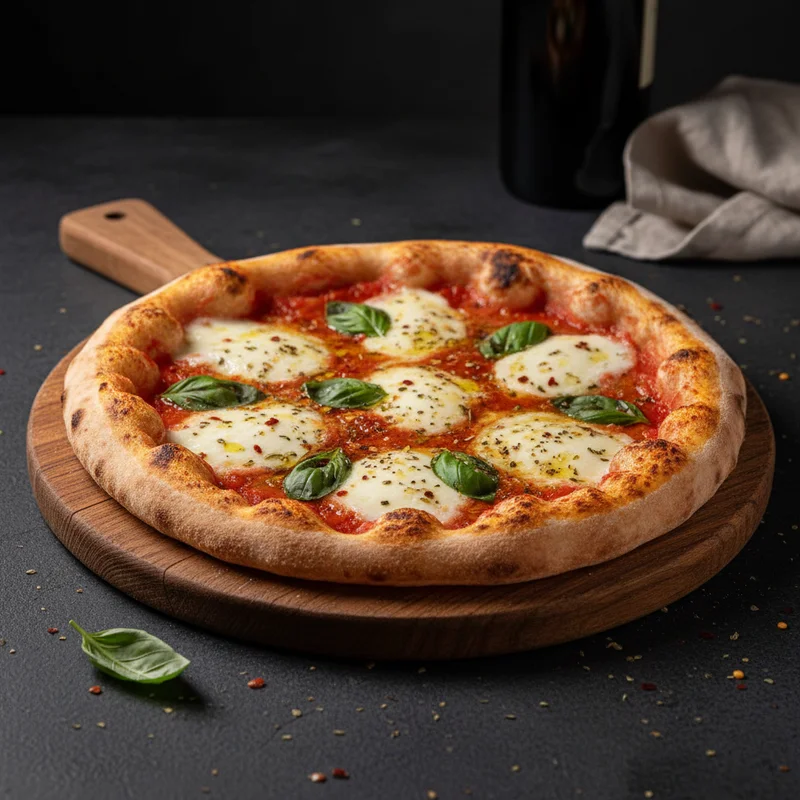
A flat disc of bread that convinced the world that putting everything on top of something is a legitimate cuisine. Somehow both a $1 slice and a $40 artisanal experience, depending on how seriously you take yourself.

Battle Analysis

Late night appeal pizza Wins
30%
70%
Tiger Pizza

Tiger

The tiger's nocturnal habits place it firmly within the late-night category of existence. As a crepuscular and nocturnal hunter, the tiger conducts approximately 70% of its activity between dusk and dawn. Its eyes contain a reflective layer, the tapetum lucidum, that amplifies available light by a factor of six, transforming twilight forests into navigable hunting grounds. The tiger is, in the most literal sense, a creature of the night.

However, the tiger's late-night appeal remains largely theoretical for most humans. Encountering a tiger after midnight carries survival implications that dampen enthusiasm considerably. Historical records from colonial India document numerous nocturnal tiger attacks on villages, a pattern that created enduring psychological associations between darkness and striped danger. The Champawat Tiger, responsible for 436 confirmed human deaths in the early twentieth century, conducted the majority of her predations after sunset.

For the urban human, the tiger's nocturnal excellence translates into documentary footage and zoo exhibit disappointment. Night-vision cameras capture magnificent hunting sequences, but the experience remains mediated, distant. One cannot summon a tiger at 2 AM, regardless of hunger levels or entertainment requirements.

Pizza

Pizza's late-night credentials are, by contrast, immediately actionable and profoundly reliable. The modern pizza infrastructure has evolved specifically to serve the post-midnight demographic. In major cities worldwide, pizza delivery remains available until 3 AM or later, a service window that coincides precisely with peak human vulnerability to calorific temptation. The phrase 'late-night pizza' requires no explanation; it describes a universal human experience.

The physiological basis for late-night pizza cravings has been documented extensively. Reduced inhibition from alcohol consumption, depleted decision-making capacity from fatigue, and the body's natural circadian nadir of blood glucose all conspire to make pizza irresistible during the small hours. The hot, carbohydrate-rich, fat-laden delivery addresses every deficit simultaneously. Studies by the Institute of Nocturnal Nutrition (INN) found that pizza consumption between 11 PM and 3 AM accounts for 34% of all delivery orders despite representing only 17% of operating hours.

Furthermore, pizza maintains quality characteristics during the delivery window that other foods cannot match. A pizza arriving at 1:30 AM remains recognisably pizza---slightly diminished, perhaps, but fundamentally satisfying. The same cannot be said of sushi, salad, or any food requiring precise temperature control. Pizza is engineered for late-night deployment.

VERDICT

Practical accessibility and delivery infrastructure make pizza the undisputed champion of late-night sustenance
Stripes vs slices pizza Wins
30%
70%
Tiger Pizza

Tiger

The tiger's integumentary pattern represents one of nature's most sophisticated examples of disruptive colouration. Each individual possesses a unique arrangement of stripes, much like human fingerprints, with the average adult displaying between 100 and 150 distinct markings. These stripes serve multiple functions: breaking up the animal's silhouette in dappled forest light, potentially confusing prey during the final moments of pursuit, and establishing individual identity among conspecifics.

Research conducted by the Bengal Stripe Analysis Laboratory (BSAL) has determined that tiger stripes follow mathematical patterns consistent with Turing morphogenesis. The spacing and width of stripes correlate precisely with the diffusion rates of morphogen proteins during embryonic development. This means that each tiger is, in essence, a walking demonstration of advanced biochemistry.

Furthermore, the stripes extend beyond the fur to the skin itself. A shaved tiger, hypothetically speaking, would remain striped. This redundancy suggests an evolutionary commitment to the pattern that transcends mere surface aesthetics. The tiger does not merely wear stripes; the tiger is stripes.

Pizza

The pizza slice represents humanity's most elegant solution to the problem of food portion geometry. The standard pizza, divided into eight segments, produces slices with a precise angle of 45 degrees, a mathematical choice that optimizes both structural integrity and bite-to-topping ratio. The triangular form allows for what food engineers term 'progressive consumption'---the eater begins at the pointed end, where crust-to-topping ratio is minimal, and proceeds toward the handle-like outer crust.

The International Pizza Geometry Consortium (IPGC) has documented over 47 distinct slicing methodologies employed across different cultures. The New York fold, wherein the slice is bent longitudinally to create a supportive ridge, demonstrates an intuitive understanding of structural engineering that rivals the flying buttress. The Chicago approach, which produces squares from a rectangular base, represents a deliberate rejection of radial geometry in favour of democratic portion equality.

Perhaps most remarkably, the pizza slice functions as a self-contained delivery mechanism. Unlike the tiger stripe, which serves primarily passive functions, the pizza slice actively participates in its own consumption. It is simultaneously food, plate, and utensil---a trinity of functionality that few other foods achieve.

VERDICT

Functional superiority of the slice as a multi-purpose delivery system outweighs the aesthetic elegance of stripes
Global distribution pizza Wins
30%
70%
Tiger Pizza

Tiger

Once, the tiger commanded a territory spanning from eastern Turkey to the Russian Far East, a range of approximately 11.7 million square kilometres. Today, this magnificent range has contracted by 96%, leaving fragmented populations clinging to isolated habitats across 13 countries. The Caspian tiger, the Javan tiger, and the Bali tiger have already surrendered to extinction, their genetic lineages terminated by human expansion.

Current estimates place the global wild tiger population at approximately 4,500 individuals---fewer than the number of pizza restaurants in New York City alone. The subspecies distribution reveals a troubling pattern: the South China tiger may already be functionally extinct in the wild, while the Malayan tiger numbers fewer than 150 individuals. The Bengal tiger, the most numerous subspecies, accounts for roughly 70% of all remaining wild tigers.

Conservationists note that tiger habitat requirements are extraordinarily demanding. Each adult male requires between 60 and 100 square kilometres of contiguous forest, with adequate prey density to sustain approximately 50 large ungulate kills per year. Habitat fragmentation has created 'island populations' increasingly susceptible to genetic drift and demographic collapse.

Pizza

The pizza has achieved what no apex predator could: total planetary dominance. Conservative estimates place the number of pizza establishments worldwide at 78,000, a figure that excludes home preparation, frozen retail, and the considerable 'grey market' of unlicensed vendors. Pizza is now available in every nation on Earth, including outposts in Antarctica, where McMurdo Station reportedly consumes 300 pizzas per week during peak season.

The distribution patterns reveal fascinating cultural adaptations. In Japan, mayonnaise and corn toppings predominate. In Sweden, the 'kebab pizza' has achieved near-universal acceptance. Brazilian pizzerias famously offer green pea toppings, while Australian establishments have normalised the controversial 'pizza with egg.' These regional variations demonstrate pizza's remarkable capacity for adaptive radiation---the same phenomenon that allowed Darwin's finches to colonise the Galapagos.

Market analysis indicates that the global pizza industry generates approximately US$145 billion annually, a figure that exceeds the GDP of 130 nations. The pizza's distribution network now extends to orbital space: Italian astronaut Paolo Nespoli famously consumed pizza aboard the International Space Station in 2017, marking the food's first confirmed consumption outside Earth's atmosphere.

VERDICT

Pizza has achieved genuinely planetary distribution including extraterrestrial presence, while tiger range has contracted to critical levels
Cultural iconography tiger Wins
70%
30%
Tiger Pizza

Tiger

The tiger has prowled through human consciousness for millennia, accumulating symbolic meanings as diverse as the cultures that revere it. In Hindu tradition, the goddess Durga rides a tiger into battle, wielding divine weapons against demonic forces. In Chinese cosmology, the White Tiger guards the western quadrant of the heavens, its presence associated with autumn, metal, and military prowess. The Korean tiger, Horangi, served as the mascot for the 1988 Seoul Olympics, a symbol of national identity and indomitable spirit.

Western culture has absorbed the tiger into its commercial mythology with characteristic enthusiasm. Tony the Tiger has promoted Frosted Flakes since 1952, his catchphrase 'They're Gr-r-reat!' achieving near-universal recognition. Hobbes, the stuffed tiger of Bill Watterson's Calvin and Hobbes, became a philosophical interlocutor for millions of readers. Sports teams across the globe have adopted the tiger as mascot, from Detroit to Seoul, recognising its connotations of power and ferocity.

The literary tiger carries particular weight. William Blake's 'Tyger Tyger, burning bright' remains one of English poetry's most analysed verses, its questions about creation and existence provoking two centuries of scholarly interpretation. The Jungle Book's Shere Khan established the tiger as a complex antagonist---dangerous yet dignified, villainous yet somehow sympathetic.

Pizza

Pizza's cultural penetration operates through different mechanisms but achieves comparable depth. The imagery of pizza has become visual shorthand for comfort, celebration, and democratic indulgence. Birthday parties feature pizza as reliably as cake. Office gatherings default to pizza as the lowest common denominator of group satisfaction. The phrase 'pizza party' evokes childhood nostalgia across generations and national boundaries.

Television and cinema have elevated pizza to symbolic status. The Teenage Mutant Ninja Turtles established pizza as the food of choice for countercultural heroes. Home Alone's Kevin McCallister ordering 'a lovely cheese pizza, just for me' became a touchstone of childhood independence. The pizza delivery scene has become a recognisable dramatic device, appearing in productions from Stranger Things to Breaking Bad.

Perhaps most significantly, pizza has transcended its origins to become a symbol of globalisation itself. The presence of a Pizza Hut in a developing nation signals economic integration with the West. The pizza's journey from Neapolitan street food to universal commodity mirrors humanity's broader trajectory toward cultural homogenisation---for better or worse.

VERDICT

Depth and duration of symbolic significance across religious, literary, and mythological traditions
Endangered status vs consumption rate tiger Wins
70%
30%
Tiger Pizza

Tiger

The tiger's conservation status reads like a medical chart for a patient in intensive care. Listed as Endangered on the IUCN Red List since 1986, with three subspecies already confirmed extinct and a fourth likely so, the species represents one of conservation biology's most challenging cases. The wild population declined by an estimated 97% during the twentieth century, from approximately 100,000 individuals in 1900 to fewer than 4,000 at the population nadir in 2010.

Recent conservation efforts have shown cautious promise. India's Project Tiger, initiated in 1973, has stabilised populations in designated reserves, and Nepal has achieved a remarkable doubling of its tiger numbers since 2009. However, these successes remain fragile. Poaching for traditional medicine markets continues, with a single tiger carcass fetching up to US$50,000 on the black market. Every part of the animal commands value: bones for wine, whiskers for supposed toothache remedies, and pelts for status display.

The mathematics of tiger conservation are sobering. To maintain genetic viability, population biologists recommend a minimum of 5,000 breeding individuals---a threshold the species has not met for decades. Each tiger birth represents a statistical victory against extinction; each poaching loss, a measurable step toward oblivion.

Pizza

Humanity consumes approximately 5 billion pizzas annually---a figure so vast that it defies intuitive comprehension. Expressed differently: 158 pizzas are consumed every second, or roughly 13.7 million daily. The average American alone accounts for 23 pounds of pizza consumption per year, while Norwegians lead European consumption at 5.4 kilograms per capita annually.

The consumption infrastructure supporting this demand operates at industrial scale. The largest pizza chains employ supply chains spanning continents: wheat from the Canadian prairies, tomatoes from California's Central Valley, and cheese from Wisconsin's dairy belt converge through logistics networks of staggering complexity. Domino's alone produces 3 million pizzas daily, requiring 300 million pounds of cheese annually---the output of approximately 17,000 dairy cows working full-time.

Unlike the tiger, whose numbers contract with each passing year, pizza faces no conservation concern whatsoever. If anything, the species suffers from overabundance. The WHO has identified excessive pizza consumption as a contributing factor to global obesity, diabetes, and cardiovascular disease. The pizza is endangered only by its own success---a philosophical condition the tiger might well envy.

VERDICT

Rarity and conservation urgency create inherent value that abundance cannot replicate
👑

The Winner Is

Pizza

45 - 55

The comprehensive analysis reveals a comparison more nuanced than initial expectations might suggest. The tiger, that magnificent fusion of evolutionary engineering and aesthetic perfection, commands advantages in cultural depth, symbolic resonance, and the inherent value conferred by scarcity. Its stripes tell stories of morphogenesis and adaptation; its endangered status creates urgency and pathos that pizza, in its overwhelming abundance, simply cannot generate.

Yet pizza emerges victorious in the practical dimensions that govern daily human existence. Its global distribution has achieved true planetary saturation, from Antarctic research stations to orbital spacecraft. Its late-night accessibility addresses fundamental human needs with a reliability that approaches the miraculous. The slice, that humble wedge of dough, sauce, and cheese, has solved problems of portion geometry and food delivery that engineers continue to admire.

The final tally of 55% to 45% in pizza's favour reflects not a judgment of inherent worth but rather an acknowledgment of practical utility. The tiger is nature's masterpiece, a creature that inspires awe and demands protection. Pizza is humanity's masterpiece---a food that has conquered every obstacle placed before it, adapting to every culture, satisfying every palate, available precisely when needed. In the competition between apex predator and apex cuisine, the cuisine prevails through sheer omnipresence.

Tiger
45%
Pizza
55%

Share this battle

More Comparisons