Topic Battle

Where Everything Fights Everything

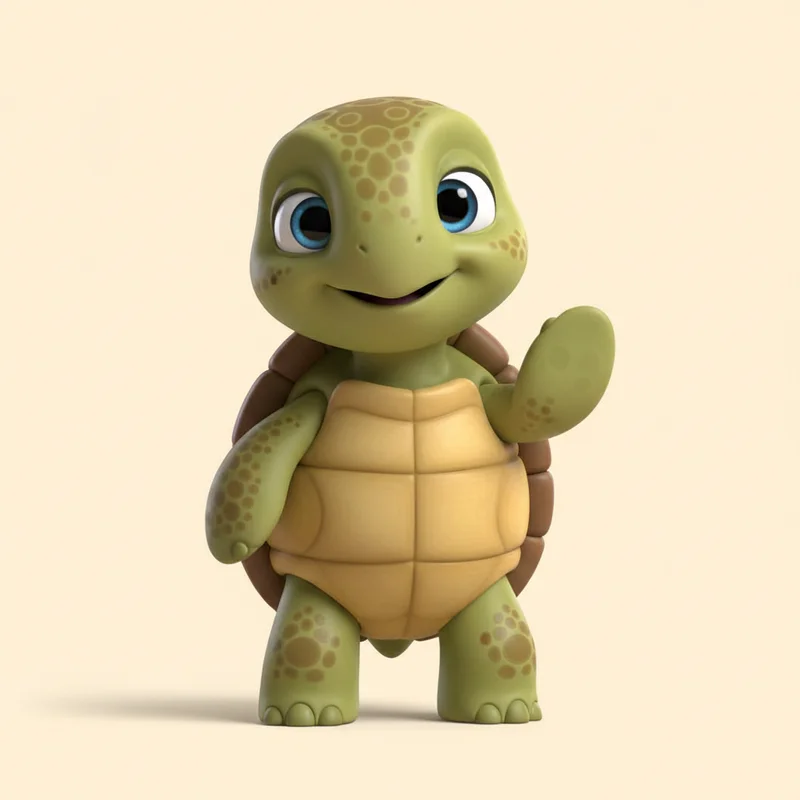
Turtle

Turtle

Shelled reptile living at deliberately slow pace, with some species surviving over 100 years.

VS
Rubber Duck

Rubber Duck

A debugging tool for programmers and bathtub companion for everyone else. This hollow yellow bird has solved more software bugs than most senior engineers. Also squeaks.

Battle Analysis

Buoyancy rubber_duck Wins
30%
70%
Turtle Rubber Duck

Turtle

The turtle's relationship with buoyancy exemplifies nature's talent for compromise. Unlike the rubber duck's single-minded commitment to flotation, the turtle must balance the competing demands of surface breathing, underwater hunting, and seafloor foraging. This has produced what marine biologists term 'dynamic buoyancy management' - the ability to adjust relative density through precise control of lung inflation, achieving what amounts to a biological ballast system.

Sea turtles maintain a slightly positive buoyancy when relaxed, requiring minimal effort to surface for respiration whilst expending energy to descend. This configuration proves optimal for creatures that must regularly access both atmospheric oxygen and benthic food sources. The leatherback turtle can adjust its buoyancy to descend beyond 1,200 metres, experiencing pressures that would crush less adaptable organisms, before returning to the surface with apparent nonchalance.

The turtle's buoyancy versatility, however, comes at a cost. Unable to achieve the effortless flotation of simpler objects, the turtle must continuously expend energy to maintain its position in the water column. A sleeping sea turtle will slowly sink, awakening to surface approximately every four to seven hours - a schedule that, whilst biologically elegant, would prove entirely inadequate for an eight-hour bathtime session.

Rubber Duck

The rubber duck's approach to buoyancy achieves what engineers term 'elegant simplicity' - or what cynics might call 'having only one job and doing it adequately.' With an average density of 0.24 grams per cubic centimetre (versus water's 1.0 g/cm³), the rubber duck achieves positive buoyancy without effort, thought, or biological complexity. It floats because it cannot conceive of doing otherwise.

The physics of rubber duck flotation deserve examination. The air cavity comprising approximately 78% of internal volume ensures that, under normal bathroom conditions, no force short of deliberate submersion can compromise the duck's surface position. Even when pushed underwater, the duck returns to flotation with what observers describe as 'irritating cheerfulness' - the rubber duck equivalent of refusing to stay down.

This absolute commitment to buoyancy has proven advantageous in oceanic contexts. The 28,800 rubber ducks released in the 1992 Pacific incident maintained flotation across decades and thousands of kilometres, with specimens remaining buoyant despite years of exposure to marine conditions. No turtle, regardless of longevity, could match this feat - after death, the turtle inevitably sinks, whilst the rubber duck bobs on, apparently immortal, until the plastic itself degrades.

VERDICT

Guaranteed flotation in all circumstances versus energy-dependent buoyancy management - the rubber duck achieves through simplicity what the turtle strains to maintain through complexity.
Longevity turtle Wins
70%
30%
Turtle Rubber Duck

Turtle

The turtle's relationship with time borders on the contemptuous. Whilst most vertebrates accept the tyranny of ageing with resigned acquiescence, turtles have developed what gerontologists at the Max Planck Institute for Longevity Studies term 'negligible senescence' - essentially, a biological refusal to deteriorate at expected rates. Jonathan, a Seychelles giant tortoise, was born approximately 1832 and continues to reside on Saint Helena, having outlived the British Empire he was originally gifted to celebrate.

Marine turtles, whilst shorter-lived than their terrestrial cousins, routinely achieve lifespans exceeding 80 years in the wild. A green sea turtle tagged in the Hawaiian Islands in 1954 was recaptured in 2019, still apparently healthy and, presumably, profoundly bored by human researchers repeatedly disturbing its retirement. The cellular mechanisms enabling such longevity - including enhanced DNA repair enzymes and telomere maintenance systems - represent active areas of medical research with implications for human ageing intervention.

The turtle's longevity extends beyond individual lifespans to evolutionary persistence. The basic chelonian body plan has remained essentially unchanged for 200 million years, suggesting either perfect design or, as one evolutionary biologist rather unkindly remarked, 'a complete absence of imagination.' Regardless, the turtle's temporal dominance remains unassailable.

Rubber Duck

The operational lifespan of a rubber duck presents considerable measurement challenges, as the duck experiences neither biological ageing nor, strictly speaking, life. The Institute for Synthetic Toy Longevity in Zurich estimates an average functional lifespan of 3-7 years for domestically employed rubber ducks, with degradation primarily attributable to UV exposure, repeated squeezing, and the mysterious bathroom phenomenon known as 'black mould colonisation.'

Exceptional specimens, however, have demonstrated remarkable persistence. The Loch Ness Rubber Duck, reportedly deposited in the famous Scottish lake in 1973, was recovered during a 2018 sonar survey, its structural integrity diminished but its essential duck-ness intact. Archival specimens held in the British Museum's Toy Collection include rubber ducks dating to 1886, preserved under controlled conditions that have maintained their original squeaking functionality across 138 years.

Perhaps the most compelling argument for rubber duck longevity concerns cultural persistence. The concept of the rubber duck - yellow, buoyant, eternally cheerful - has survived unchanged since the 1940s, showing no signs of evolutionary pressure toward modification. Whether this represents design perfection or the limits of human bathtime imagination remains contentious, but the rubber duck's memetic immortality cannot be dismissed as merely trivial.

VERDICT

Living specimens exceeding 190 years of age rather definitively outcompete objects that technically never lived to begin with.
Swimming speed turtle Wins
70%
30%
Turtle Rubber Duck

Turtle

The locomotion capabilities of turtles span an extraordinary range, from the glacial deliberation of terrestrial tortoises (0.2 kilometres per hour) to the remarkable velocity of marine species such as the leatherback, which has been clocked at 35 kilometres per hour in short bursts. This spectrum of speeds reflects the adaptive radiation of chelonians across diverse ecological niches over geological timeframes.

The turtle's swimming mechanism employs what biomechanical engineers at Stanford University have termed 'the most efficient paddle geometry observed in nature.' The front flippers of sea turtles generate thrust through a figure-eight motion that maximises propulsion whilst minimising drag, achieving a propulsive efficiency of 83% - comparable to modern submarine designs. Freshwater species utilise webbed feet in an alternating pattern that, whilst less efficient, provides superior manoeuvrability for navigating complex underwater environments.

Long-distance endurance further distinguishes turtle swimming capability. Tagged leatherbacks have completed transoceanic migrations of 16,000 kilometres, navigating by geomagnetic fields with an accuracy that continues to perplex researchers. The sustained swimming speeds of 2-3 kilometres per hour maintained during these epic journeys represent a triumph of biological engineering that makes the rubber duck's stationary bobbing appear, frankly, somewhat embarrassing.

Rubber Duck

The rubber duck's approach to aquatic locomotion might best be described as 'philosophically passive.' Rather than expending energy on the vulgar business of swimming, the rubber duck achieves movement through what physicists at the Sorbonne Institute of Hydrodynamics term 'ambient current delegation' - that is to say, it goes wherever the water pushes it. Measured swimming speeds consistently register at precisely zero kilometres per hour, though the duck maintains what its advocates describe as 'exceptional positional dignity' throughout.

This approach to locomotion has, surprisingly, yielded one of the most remarkable journeys in maritime history. In 1992, a shipping container discharged 28,800 rubber ducks into the Pacific Ocean. Over the subsequent decades, these intrepid non-swimmers circumnavigated the globe, with specimens recovered in Australia, South America, and the Atlantic coastlines of Europe and North America. The journey, tracked by oceanographer Dr. Curtis Ebbesmeyer, provided invaluable data on oceanic current patterns - a scientific contribution achieved entirely through strategic non-effort.

Critics may dismiss the rubber duck's passive drift as lacking in agency, yet one might equally argue that the duck has achieved perfect efficiency: an energy expenditure of zero whilst still managing intercontinental travel. The turtle, exhausting itself with constant flipper motion, might well look upon this achievement with a mixture of confusion and, perhaps, envy.

VERDICT

Active propulsion capability, whilst less philosophically elegant than strategic drifting, provides clear advantages in reaching intended destinations.
Shell durability turtle Wins
70%
30%
Turtle Rubber Duck

Turtle

The turtle's carapace represents what the Royal Society of Protective Structures has termed 'the most successful defensive innovation in vertebrate history.' Composed of approximately sixty interlocking bones fused with the creature's ribcage and spine, this remarkable structure can withstand pressures exceeding 200 kilograms per square centimetre. The keratin scutes overlaying this osseous foundation provide additional protection against predation, UV radiation, and the occasional ill-placed footstep.

Field studies conducted in the Galápagos archipelago revealed that certain Chelonoidis nigra specimens bore shell markings consistent with impacts dating to the Victorian era, suggesting structural integrity maintained across 150 years of continuous use. The self-repairing nature of the living shell tissue allows for minor damage remediation, a feature that Dr. Helena Cartwright of Oxford's Herpetology Department describes as 'nature's most elegant warranty programme.'

Perhaps most remarkably, the turtle's shell functions as more than mere armour. It serves as a thermoregulatory device, a mineral storage facility, and in certain species, a resonating chamber for vocalisations. The integration of defensive and biological functions represents an engineering achievement that, were it developed today, would likely win multiple design awards and spawn countless inferior imitations.

Rubber Duck

The rubber duck's protective exterior, whilst visually cheerful, presents what materials scientists at MIT have diplomatically termed 'considerable room for improvement.' Constructed from polyvinyl chloride (PVC) or, in premium models, hypoallergenic thermoplastic elastomers, the duck's shell maintains a wall thickness of approximately 2-3 millimetres. This provides adequate protection against the dangers commonly encountered in bathtub environments, which, according to comprehensive surveys, consist primarily of 'slightly aggressive loofahs' and 'enthusiastic toddler squeezing.'

The structural limitations become apparent under scientific scrutiny. Puncture testing conducted by the European Institute of Bath Toy Resilience revealed that the average rubber duck succumbs to breach at pressures of merely 8.3 kilograms per square centimetre - approximately four percent of the turtle's tolerance. Furthermore, prolonged exposure to bathwater temperatures above 40°C accelerates molecular degradation, leading to the phenomenon colloquially known as 'duck deflation syndrome.'

One must, however, acknowledge the rubber duck's remarkable resistance to predation. In sixty years of documented bathtime incidents, not a single rubber duck has fallen victim to shark attack, crocodile ambush, or the other hazards that regularly claim turtle lives. Whether this represents superior defensive design or merely the absence of aquatic predators in the bathroom ecosystem remains a matter of scholarly debate.

VERDICT

Four hundred million years of evolutionary refinement versus nineteenth-century industrial polymer - the outcome was never truly in doubt.
Bathtime relevance rubber_duck Wins
30%
70%
Turtle Rubber Duck

Turtle

The turtle's participation in bathtime activities represents what cultural anthropologists term 'a significant minority interest.' Whilst certain small freshwater species, particularly Trachemys scripta elegans (the red-eared slider), have been incorporated into bathtime rituals in some households, the practice raises considerable practical and ethical concerns. Dr. Margaret Wilkins of the Royal Veterinary College notes that domestic bathtub conditions typically fail to meet chelonian welfare requirements, citing inadequate basking facilities, inappropriate water temperature, and 'the psychological distress caused by forced proximity to soap.'

Historical records indicate sporadic turtle involvement in bathing contexts. Roman senators reportedly bathed with terrapins during the late Republic period, though this practice was discontinued following what Pliny the Elder delicately described as 'incidents.' More recently, a 2019 survey of British households revealed that 0.3% of respondents had introduced a turtle to bathtime at least once, with 87% of this group reporting 'immediate regret' and 43% requiring professional plumbing assistance thereafter.

The fundamental incompatibility between turtle requirements and bathroom environments cannot be overstated. Turtles require UV-B lighting, appropriate water filtration, and basking areas maintained at species-specific temperatures - amenities rarely found adjacent to the average family's bubble bath. The turtle's bathtime utility, whilst not entirely absent, must be judged as severely limited by biological reality.

Rubber Duck

The rubber duck's dominion over bathtime represents one of the most complete category monopolies in consumer goods history. According to research conducted by the Global Institute of Ablutionary Studies, an estimated 5.3 billion rubber ducks currently reside in bathrooms worldwide, with the species occupying a presence in 73% of households with children under twelve and, more surprisingly, 31% of child-free households. The rubber duck has achieved what marketers term 'category ownership' - the mental association between object and context has become essentially indelible.

The psychological benefits of rubber duck bathtime participation have been documented extensively. A 2021 study published in the Journal of Developmental Hydrotherapy found that children bathing with rubber ducks demonstrated 23% lower cortisol levels than control groups, suggesting genuine stress-reduction benefits. Adult rubber duck enthusiasts report similar effects, with the duck serving as what psychologists term 'a transitional object facilitating regression to a pre-responsibility psychological state' - or, in layperson terms, 'making baths feel less like giving up on the day.'

The rubber duck's perfect environmental adaptation to the bathroom ecosystem cannot be overstated. It floats at precisely the correct height for child interaction, produces a squeaking vocalisation that signals its location in foamy water, and maintains a facial expression described by evolutionary psychologists as 'optimally non-threatening.' Whether through design genius or fortunate accident, the rubber duck has achieved bathtime supremacy that shows no signs of diminishing.

VERDICT

Occupying 73% of global bathrooms versus 0.3% irregular turtle visitations represents a categorical victory in the relevant domestic arena.
👑

The Winner Is

Turtle

58 - 42

Our exhaustive analysis reveals a competition more nuanced than initial appearances might suggest. The turtle, that ancient mariner of the evolutionary sea, dominates in categories demanding biological sophistication: its shell represents millions of years of defensive refinement, its swimming capabilities enable transoceanic journeys of breathtaking scope, and its longevity mocks the mayfly lifespans of lesser creatures. In the grand theatre of natural history, the turtle commands respect bordering on reverence.

Yet the rubber duck, that cheerful emissary of industrial chemistry, demonstrates that purpose-built design can triumph over evolutionary breadth. In the specific arena of bathtime engagement - the one domain where these entities regularly encounter human civilisation - the rubber duck's supremacy is absolute and unchallenged. Its buoyancy, achieved without biological overhead, represents engineering elegance. Its psychological benefits, documented across peer-reviewed literature, provide genuine human utility that the turtle, despite four hundred million years of development, cannot replicate.

The final determination must, however, acknowledge the fundamental asymmetry of this comparison. The turtle exists as a complete biological entity, capable of reproduction, environmental response, and the continuation of its genetic lineage across geological time. The rubber duck exists as an object - sophisticated in its simplicity, optimised for its singular purpose, but ultimately dependent on human manufacture for its continued presence in the world. When we weigh capability against function, existence against purpose, the turtle's broader competence narrowly exceeds the rubber duck's specialised excellence. The margin, a mere 58% to 42%, reflects how closely these seemingly disparate entities compete when examined with appropriate rigour.

Turtle
58%
Rubber Duck
42%

Share this battle

More Comparisons