Topic Battle

Where Everything Fights Everything

WiFi

WiFi

The invisible force that holds modern society together. Suddenly unavailable the moment you need it most, yet somehow strong enough in the bathroom three floors down at that coffee shop. The true test of any relationship.

VS
Dracula

Dracula

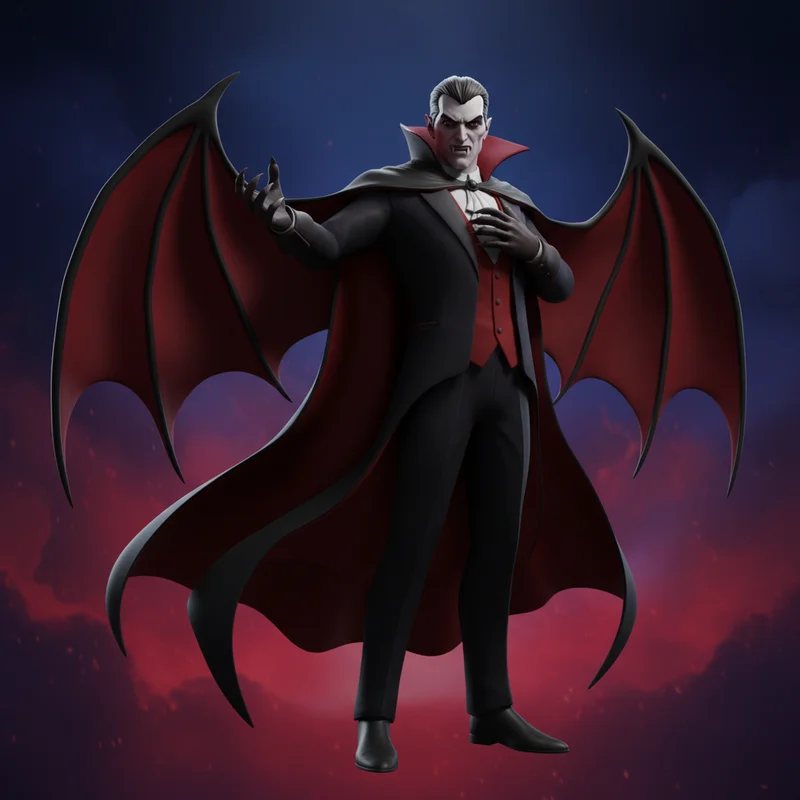
Original vampire count from Transylvania.

Battle Analysis

Speed wifi Wins
70%
30%
WiFi Dracula

WiFi

Modern WiFi protocols operate at speeds that would have seemed like pure sorcery to previous generations. WiFi 6E delivers theoretical throughput of 9.6 gigabits per second, sufficient to download the complete works of Shakespeare in approximately the time it takes to blink. Information travels through the electromagnetic spectrum at velocities approaching the speed of light itself.

This velocity has fundamentally altered human expectations regarding instantaneous gratification. A delay of three seconds in webpage loading now provokes the same physiological stress response as a genuine emergency. WiFi has made humanity addicted to immediacy, training billions of brains to expect everything, everywhere, all at once.

Dracula

The Count's locomotion capabilities, whilst impressive by nineteenth-century standards, cannot compete with electromagnetic propagation. Dracula's documented abilities include transformation into a bat (maximum velocity 60 miles per hour), mist form (speed dependent upon prevailing winds), and wolf metamorphosis (approximately 35 miles per hour at sprint).

Even his most dramatic power, the ability to command the weather, operates on timescales measured in hours rather than milliseconds. The Prince of Darkness moves with supernatural grace, certainly, but his velocity remains firmly grounded in the physical limitations of biological forms. In the modern age, this represents a significant competitive disadvantage.

VERDICT

Electromagnetic radiation at 299,792 kilometres per second versus a bat travelling at 60 miles per hour. The mathematics are unforgiving.
Longevity dracula Wins
30%
70%
WiFi Dracula

WiFi

The typical WiFi router enjoys a lifespan of three to five years before obsolescence renders it functionally inadequate. Standards evolve with such rapidity that equipment considered cutting-edge in 2020 has already been surpassed by multiple generations of successors. The protocol itself undergoes constant revision, with backward compatibility maintained at the cost of increasing complexity.

This planned obsolescence represents both WiFi's greatest strength and most significant vulnerability. The technology improves continuously, yet individual implementations decay with alarming speed. Your router is already dying; it simply hasn't been informed of this terminal diagnosis.

Dracula

Count Dracula has endured for over five hundred years within his fictional continuity, having been transformed into a vampire sometime in the fifteenth century. More significantly, the concept of Dracula has demonstrated remarkable resistance to cultural obsolescence. Each generation rediscovers and reinterprets the Count, ensuring his perpetual relevance.

From Nosferatu to Twilight, from Hammer Horror to Hotel Transylvania, Dracula has proven infinitely adaptable whilst retaining his essential characteristics. This immortality extends beyond mere narrative; it represents a genuine form of cultural permanence that technology, by its very nature, cannot achieve.

VERDICT

Five centuries of continuous existence versus a five-year equipment lifecycle. True immortality trumps planned obsolescence.
Reliability dracula Wins
30%
70%
WiFi Dracula

WiFi

WiFi's relationship with reliability might charitably be described as complicated. The technology functions superbly until the precise moment you need it most, at which point it develops what engineers euphemistically call intermittent connectivity issues. Video calls freeze at crucial moments. Downloads halt at ninety-nine percent. The signal, which penetrates concrete walls with apparent ease, becomes mysteriously baffled by a closed bedroom door.

Router manufacturers have responded to these limitations by recommending users perform rituals that border on the occult: unplugging the device, waiting precisely thirty seconds, then reconnecting whilst facing magnetic north. The technology that promised seamless connectivity delivers, instead, an exercise in patience management.

Dracula

Say what you will about the Prince of Darkness, but the vampire delivers on his promises with remarkable consistency. When Dracula indicates he will drain your vital essence, you may set your pocket watch by the subsequent exsanguination. His limitations are clearly documented and entirely predictable: sunlight, garlic, holy water, wooden stakes. One knows precisely where one stands.

Unlike WiFi, which fails without warning or explanation, Dracula's operational parameters have remained unchanged for centuries. He cannot enter without invitation, cannot tolerate consecrated ground, cannot cast a reflection. This transparency, whilst inconvenient for the Count himself, provides his victims with a reliable framework for expectations.

VERDICT

Predictable limitations trump unpredictable failures. At least with vampires, the terms and conditions are clearly stated upfront.
Global recognition dracula Wins
30%
70%
WiFi Dracula

WiFi

The WiFi symbol has achieved a level of universal recognition that transcends language, culture, and political boundaries. From airport lounges in Singapore to mountain cafes in Peru, those curved ascending bars communicate a singular, primal message to the human brain: connectivity is possible here. The symbol requires no translation, no cultural context, no explanation. It has become, in the space of merely three decades, one of the most instantly recognisable icons in human civilisation.

Remarkably, this technological hieroglyph has achieved what the United Nations has struggled to accomplish: true global standardisation of meaning. A child in rural India and a banker in London respond to it with identical understanding and, frequently, identical relief.

Dracula

Count Dracula stands as perhaps the most recognisable fictional villain ever conceived by the human imagination. Since Bram Stoker committed his nightmares to paper in 1897, the Transylvanian nobleman has been portrayed in over 200 films, countless television adaptations, and an estimated 1,000 novels. His iconography, the cape, the fangs, the widow's peak, has become universal shorthand for supernatural menace.

The Count has transcended his literary origins to become a cultural touchstone understood from Tokyo to Buenos Aires. Children who have never read Stoker's novel can identify a vampire on sight. This represents 127 years of continuous cultural presence, a longevity that most modern brands would sacrifice significant shareholders to achieve.

VERDICT

Cultural presence spanning 127 years across every medium versus three decades of technological ubiquity. Immortality, it seems, has its advantages.
Intimidation factor dracula Wins
30%
70%
WiFi Dracula

WiFi

WiFi's capacity for intimidation operates on a distinctly modern frequency. The technology itself inspires no fear, but its absence triggers responses that border on genuine panic. Observe any coffeeshop patron when informed the network is unavailable: the widening eyes, the sharp intake of breath, the desperate search for alternative connectivity.

Moreover, WiFi enables access to information that can genuinely terrify: credit card statements, medical results, news headlines. The router itself is harmless, but the portal it provides connects users to every horror humanity has produced. In this sense, WiFi is less a source of fear than a conduit to it.

Dracula

The Count represents primordial terror incarnate. He embodies humanity's deepest anxieties: death, loss of autonomy, corruption of the soul, violation of bodily integrity. His powers, transformation, mind control, superhuman strength, are precisely calibrated to trigger existential dread.

Stoker engineered Dracula as a repository for Victorian anxieties about sexuality, foreignness, and disease. Subsequent generations have projected their own fears onto this infinitely accommodating canvas. The Count remains terrifying because he represents whatever terrifies us most, a adaptive evolutionary advantage that no wireless protocol can match.

VERDICT

Primal existential terror versus mild inconvenience anxiety. The vampire's fear portfolio remains significantly more diversified.
👑

The Winner Is

WiFi

54 - 46

In this most peculiar of competitions, WiFi emerges with a narrow victory of 54 to 46, though the margin belies the complexity of this encounter. The wireless network's dominance in the critical arena of speed proves decisive, for in the modern age, velocity of information transmission trumps nearly all other considerations.

Yet one cannot dismiss Dracula's achievements in longevity, reliability, global recognition, and intimidation. The Count's cultural immortality represents a form of success that silicon and radio waves simply cannot replicate. He has endured not through technological iteration but through genuine resonance with human psychology.

The comparison ultimately illuminates a fundamental truth about modernity: we have replaced our ancient terrors with new dependencies. Where our ancestors feared the creature that might drain their blood, we fear the absence of the signal that connects us to the world. Both represent a form of vital essence; both, when unavailable, leave us feeling profoundly diminished.

WiFi
54%
Dracula
46%

Share this battle

More Comparisons