
Topic Battle

Where Everything Fights Everything

WiFi

WiFi

The invisible force that holds modern society together. Suddenly unavailable the moment you need it most, yet somehow strong enough in the bathroom three floors down at that coffee shop. The true test of any relationship.

VS
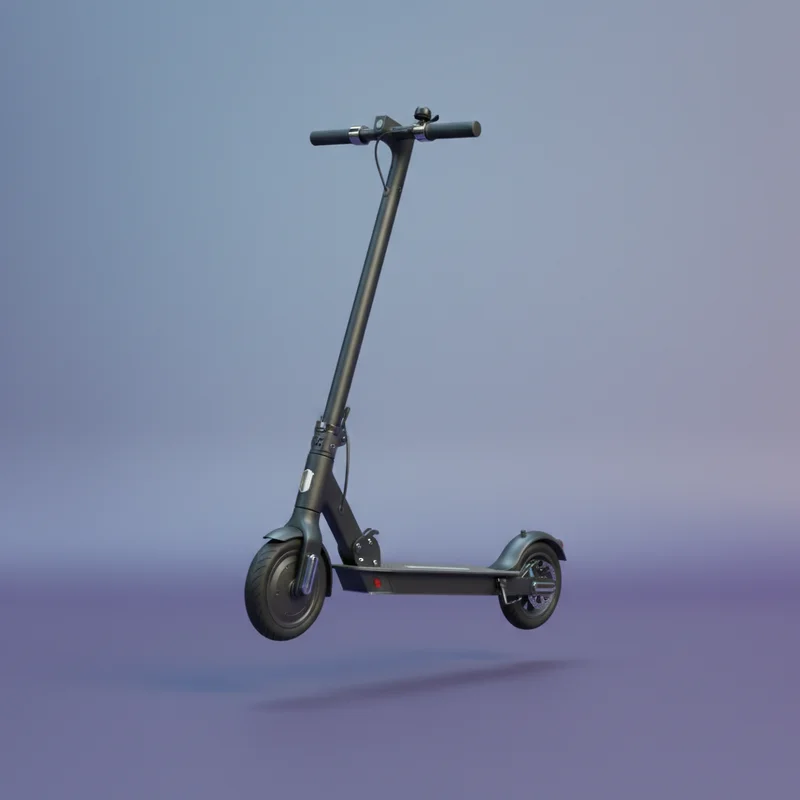
Electric Scooter

Electric Scooter

A vehicle that makes you question both transportation and dignity simultaneously. Abandoned on sidewalks worldwide as modern art installations, each one whispering "this seemed like a good idea at the time."

The Matchup

In the great catalogue of human inventions designed to liberate us from physical constraints, few have promised so much while delivering such reliably inconsistent results. WiFi, the invisible web connecting over 18 billion devices worldwide, faces off against the electric scooter, a contraption that has deposited itself on pavements across 100 cities globally. One transmits data through walls; the other transports humans into walls. Both have fundamentally altered urban existence in ways their inventors almost certainly did not anticipate.

This is the story of two technologies united by a common thread: the absolute certainty they will abandon you at the precise moment you need them most. The router that loses signal when you enter the bathroom. The scooter whose battery expires three kilometres from your destination. Together, they represent humanity's eternal optimism in the face of mechanical betrayal.

Battle Analysis

Speed wifi Wins
70%
30%
WiFi Electric Scooter

WiFi

WiFi operates at what can only be described as theoretical velocity. The latest WiFi 6E standard promises speeds up to 9.6 Gbps, a figure so impressive it exists primarily in laboratory conditions and marketing materials. In practice, the average home WiFi connection delivers approximately 50-100 Mbps, which is still fast enough to stream four simultaneous episodes of programmes nobody in the household admits to watching.

The speed of WiFi is perhaps best understood through its relationship with walls. A single wall reduces signal strength by approximately 25%. Two walls, and your gigabit connection has become a polite suggestion. Three walls, and you might as well be communicating via carrier pigeon. The technology travels at the speed of light, then immediately crashes into your neighbour's concrete renovation project.

WiFi's speed also depends heavily on how many devices are connected. The router in a modern home serves not just computers and phones, but thermostats, refrigerators, doorbells, and light bulbs - all of which apparently require constant internet access to perform functions they managed perfectly well without for decades.

Electric Scooter

The electric scooter offers a more honest form of speed. Most rental scooters are capped at 25 km/h, a velocity chosen specifically to exist in the uncomfortable zone between "too fast for pavements" and "too slow for roads." Private scooters can reach 40-65 km/h, though achieving these speeds typically requires the rider to adopt an aerodynamic crouch that looks undignified in business casual attire.

Unlike WiFi, the scooter's speed is consistent and predictable - until the battery begins its inevitable decline. A fully charged electric scooter will maintain its promised velocity for approximately fifteen to thirty kilometres, after which it enters a phase best described as assisted walking. The transition is rarely gradual. One moment you are travelling at speed; the next, you are pushing a surprisingly heavy aluminium frame uphill.

The scooter's speed is also affected by the rider's weight, the incline of the terrain, and the ambient temperature. Cold weather can reduce battery efficiency by up to 40%, meaning winter scooter riders must choose between arriving on time and arriving warm. This is not a choice that WiFi users are required to make.

Reliability electric_scooter Wins
30%
70%
WiFi Electric Scooter

WiFi

WiFi reliability follows a pattern that scientists have yet to adequately explain. The connection will function flawlessly for weeks, allowing users to develop a dangerous sense of confidence. Then, without warning or apparent cause, it will cease working entirely - typically during a video call with someone important or at the climactic moment of a live sporting event.

The troubleshooting process for unreliable WiFi has been unchanged since the technology's inception: turn it off, wait ten seconds, turn it back on. This ritual, performed billions of times daily across the planet, has roughly a 73% success rate. For the remaining 27%, the solution involves unplugging the router entirely, waiting an unspecified period, and hoping. When this fails, one calls the internet service provider and waits on hold for forty-five minutes to be told to try the first step again.

WiFi's reliability is also seasonal. Summer brings interference from air conditioning units. Winter brings interference from heating systems. Spring and autumn provide brief windows of stable connectivity, which users spend complaining about the previous season's outages.

Electric Scooter

The electric scooter's reliability is refreshingly binary: either it works, or it does not. There is no intermediate state of "connecting" or "limited connectivity." The scooter is present and functional, or it is a twelve-kilogram sculpture that you must carry home. This clarity, while occasionally inconvenient, is philosophically honest.

Rental scooters add additional variables to the reliability equation. Approximately 15% of scooters in any given fleet are non-functional at any time, either due to dead batteries, mechanical damage, or being deposited in locations that the GPS describes as "available" but which the human eye identifies as "the bottom of a canal." The app will show you a scooter. The scooter will not show you the same courtesy.

Private scooter ownership improves reliability considerably, though it introduces new concerns. Tyres puncture, brakes wear, and batteries degrade - losing approximately 20% of their capacity within two years. The scooter, unlike WiFi, cannot be fixed by turning it off and on again. It requires actual mechanical intervention, performed by actual humans, at actual cost.

Global reach wifi Wins
70%
30%
WiFi Electric Scooter

WiFi

WiFi's global domination is nearly complete. Over 4.5 billion people now have access to WiFi connectivity, whether through home networks, public hotspots, or the coffee shop whose password is inexplicably "coffee123" despite being posted on a sign visible from space. The technology has become so ubiquitous that its absence is now considered remarkable, a fact that would have astonished anyone attempting to connect to the internet in 1997.

The reach of WiFi extends beyond Earth itself. The International Space Station has had WiFi since 2008, allowing astronauts to browse the same websites as the rest of humanity, just at significantly higher altitude. The technology has achieved what few human inventions manage: it has become completely invisible through total saturation. We notice WiFi only when it disappears, like oxygen or competent governance.

WiFi's global infrastructure represents an investment of hundreds of billions of dollars in routers, access points, cables, and the small blinking lights that reassure us something is happening. Every airport, hotel, hospital, and increasingly every park bench offers connectivity. The question is no longer "is there WiFi?" but rather "what is the password, and will you judge me for asking?"

Electric Scooter

The electric scooter's global reach is more modest but expanding rapidly. Scooter-sharing services now operate in over 100 cities across 30 countries, though "operate" is perhaps generous terminology for what sometimes resembles organised chaos. The scooters appeared almost overnight in 2018, deposited on pavements like technological dandelions, and have since become a permanent fixture of urban landscapes.

Private electric scooter ownership has grown even faster, with global sales exceeding 40 million units annually. The devices ship primarily from factories in China to consumers worldwide who have decided that walking is simply too pedestrian. The scooter has achieved particular popularity in Europe and Asia, where urban density makes short electric journeys practical, and in America, where they provide an alternative to driving two kilometres to a gym to walk on a treadmill.

However, the scooter's reach is limited by geography in ways WiFi is not. Hills defeat them. Rain discourages them. Snow renders them genuinely dangerous. The scooter is fundamentally a temperate climate technology, thriving in conditions that also favour outdoor cafes and mild optimism. WiFi, by contrast, works equally well in all weather, asking only that the router remain dry and powered.

Social impact wifi Wins
70%
30%
WiFi Electric Scooter

WiFi

WiFi has restructured human society with a thoroughness that previous technologies only dreamed of achieving. Remote work, enabled primarily by WiFi connectivity, now involves over 25% of professional workers in developed nations - a figure that would have seemed implausible before 2020 and now seems inevitable. The technology has collapsed the distinction between workplace and home, allowing people to be professionally available at all times, which is either liberation or imprisonment depending on one's employer.

The social dynamics of WiFi extend to public spaces. Coffee shops have become offices. Libraries have become co-working spaces. Parks have installed WiFi to accommodate people who apparently cannot sit near a tree without checking email. The question "do you have WiFi?" has replaced "how are you?" as the standard greeting when entering any commercial establishment.

WiFi has also enabled new forms of social connection and isolation simultaneously. Social media, streaming services, and video calling all depend on wireless connectivity. These tools allow grandparents to see grandchildren across continents, friends to maintain relationships across time zones, and strangers to argue with each other about topics neither fully understands. WiFi does not judge how we use it. WiFi only judges whether we are within range.

Electric Scooter

The electric scooter's social impact has been concentrated in urban environments, where it has become both transportation solution and pavement obstacle. Scooters have reduced short car journeys by an estimated 5-10% in cities where they operate, a modest but measurable shift in transport behaviour. They have also generated approximately 50,000 emergency room visits annually in the United States alone, mostly involving users who overestimated their balance and underestimated curbs.

The scooter has created new social tensions previously unimagined. Pedestrians resent scooters on pavements. Cyclists resent scooters in bike lanes. Drivers resent scooters on roads. Scooter riders, it seems, are welcome nowhere and tolerated everywhere. The devices have spawned new regulations, new insurance products, and new arguments at city council meetings attended by people with strong opinions about wheel sizes.

Perhaps most significantly, the scooter has democratised a particular form of urban mobility. Users skew younger and less wealthy than average car owners, suggesting the technology fills a genuine transportation gap. Whether this represents progress or merely the latest iteration of the human desire to travel slightly faster than walking remains a question for future historians and present-day hospital administrators.

Sustainability electric_scooter Wins
30%
70%
WiFi Electric Scooter

WiFi

WiFi's environmental impact is largely invisible, which is either reassuring or concerning depending on one's disposition. The global network of routers, servers, and data centres consumes approximately 1% of global electricity - a figure that sounds modest until one calculates that this equals the total energy consumption of many small nations. Your ability to stream cat videos is powered by the electrical output of a medium-sized country.

The hardware itself presents recycling challenges. The average router contains circuit boards, plastics, and metals that require specialised processing to reclaim. Most routers are replaced every three to five years, creating a steady stream of e-waste that municipalities are not entirely certain how to handle. The blinking lights eventually stop blinking, and the router joins its ancestors in the electronics graveyard.

On the positive side, WiFi enables efficiencies that may offset its consumption. Remote work, video conferencing, and digital document sharing all reduce the need for physical travel and paper. Whether this net calculation favours WiFi depends on how honestly one accounts for the electricity consumed by devices that technically could be turned off but never are.

Electric Scooter

The electric scooter markets itself as a sustainable transport solution, and this is not entirely dishonest. A typical scooter journey consumes approximately 0.015 kWh of electricity, compared to roughly 0.3 kWh for the same distance by car. The mathematics favour the scooter dramatically - assuming the scooter actually replaces a car journey rather than a walk, which research suggests happens in only 30-40% of cases.

The sustainability calculation becomes more complex when considering the scooter's lifespan. Shared scooters in urban fleets survive an average of 18 months to 2 years, battered by weather, vandalism, and users who believe "maximum weight capacity" is merely a suggestion. Manufacturing each scooter generates approximately 100-150 kg of CO2, meaning the device must complete hundreds of rides before achieving carbon neutrality with the car trips it theoretically displaced.

Battery production remains the elephant in the room, or more accurately, the lithium mine in the landscape. Scooter batteries require cobalt and lithium extracted through processes that no one would describe as sustainable. When the battery eventually fails, recycling options remain limited, and many batteries simply end up in landfill, leaching chemicals into soil that previous generations managed not to pollute with personal transportation devices.

👑

The Winner Is

WiFi

58 - 42

In the final assessment, WiFi emerges victorious through the simple mathematics of ubiquity. The technology has achieved what electric scooters can only aspire to: complete integration into the fabric of daily existence. One can survive without an electric scooter; one cannot, it seems, survive without checking whether the WiFi is working.

The electric scooter offers genuine utility for specific journeys in specific conditions - the last-mile solution for the first-world problem of not wanting to walk fifteen minutes. WiFi offers connectivity for everything else: work, entertainment, communication, and the background radiation of digital existence that hums through modern life like electricity through wires.

Yet both technologies share a fundamental honesty about their limitations. The scooter will run out of battery. The WiFi will drop at inconvenient moments. Neither pretends to be more reliable than it is. In this sense, they are perfectly suited to an age that has learned to expect both miracles and disappointments from its machines, often within the same minute.

The winner is WiFi. But the electric scooter, standing alone on a pavement somewhere with 8% battery remaining, three kilometres from anywhere useful, has the last laugh. At least it got you outside.

WiFi
58%
Electric Scooter
42%

Share this battle

More Comparisons