
Topic Battle

Where Everything Fights Everything

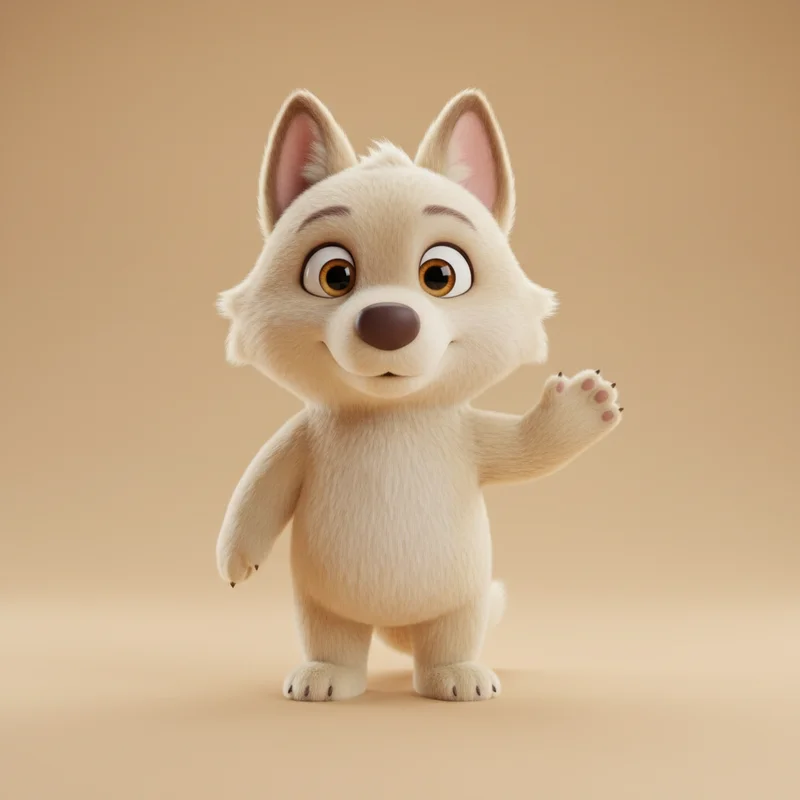
Wolf

Wolf

Pack-hunting canid ancestor of domestic dogs, famous for howling and complex social hierarchies.

VS
Love

Love

Universal emotion driving art, war, and terrible decisions.

Battle Analysis

Predictability wolf Wins
70%
30%
Wolf Love

Wolf

Wolf behaviour demonstrates remarkable consistency governed by biological imperatives. Territorial marking follows established patterns, hunting occurs when hunger demands, and pack hierarchies maintain stability through ritualised interactions that rarely escalate to genuine violence. Wildlife biologists can predict wolf movements with considerable accuracy based on prey distribution, seasonal patterns, and topographical features.

This predictability stems from wolves' fundamental rationality—they act in accordance with survival interests, avoiding unnecessary risks and maximising caloric returns on hunting investments. A wolf encountering a moose will calculate threat versus reward with the dispassionate efficiency of an actuarial scientist. There are no wolf equivalents to Romeo's balcony speech or Gatsby's green light obsession.

Love

Love's unpredictability has confounded philosophers, poets, and relationship counsellors throughout human history. The emotion strikes without warning, often selecting targets that defy rational explanation. Successful executives abandon careers for unsuitable partners. Sensible individuals make spectacularly inadvisable life decisions whilst under love's influence. The neurochemical cocktail associated with romantic attachment actively impairs prefrontal cortex function, diminishing precisely those cognitive capacities required for sound judgment.

Attempts to systematise love have met with limited success. Dating algorithms, despite processing millions of data points, achieve match success rates that barely exceed chance. Arranged marriages, supposedly grounded in rational compatibility assessment, demonstrate similar divorce rates to love matches. Love remains, in the language of systems analysis, a chaotic variable resistant to prediction or control.

VERDICT

Wolf behaviour follows observable biological patterns; love defies prediction despite millennia of analytical effort.
Cultural impact love Wins
30%
70%
Wolf Love

Wolf

The wolf has stalked through human mythology since cave paintings first appeared on Palaeolithic walls. Romulus and Remus, founders of Rome, were allegedly suckled by a she-wolf—a foundational myth for one of history's most influential civilisations. Norse mythology features Fenrir, the monstrous wolf destined to devour Odin at Ragnarok, whilst Native American traditions revere wolves as teachers, pathfinders, and spiritual guides.

Contemporary culture maintains this lupine fascination. Werewolf mythology spans continents and centuries, whilst modern conservation efforts have transformed wolves from vermin to be exterminated into symbols of wilderness restoration. The reintroduction of wolves to Yellowstone National Park generated ecological cascades that physically altered river courses—a phenomenon now cited in environmental discourse worldwide.

Love

Love's cultural footprint encompasses the entirety of human artistic achievement. The emotion has generated more songs, poems, novels, films, and paintings than any other subject. Shakespeare's sonnets, Beethoven's symphonies, the Taj Mahal itself—all monuments to love's capacity to inspire creative transcendence. The greeting card industry alone represents a $7.5 billion annual tribute to love's commercial viability.

Beyond artistic production, love has shaped historical trajectories. The Trojan War, according to Homer, erupted over Helen's beauty. Edward VIII abdicated the British throne for Wallis Simpson. Countless wars, alliances, and political arrangements have been forged or broken on love's altar. Whilst wolves appear in mythology as powerful symbols, love generates mythology—it is the subject matter from which cultural narratives are constructed rather than merely a character within them.

VERDICT

Wolves feature prominently in mythology and symbolism; love constitutes the primary subject matter of human artistic expression.
Survival instinct wolf Wins
70%
30%
Wolf Love

Wolf

The wolf's survival capabilities represent millennia of evolutionary refinement. Pack hunting strategies enable wolves to bring down prey ten times their individual body weight, including elk, moose, and occasionally bison. Their territorial range can extend to 1,000 square miles, patrolled with tireless efficiency by animals capable of travelling 30 miles in a single day.

Physiologically, the wolf is engineered for endurance predation. A bite force of 400 pounds per square inch ensures successful kills, whilst a digestive system capable of processing 20 pounds of meat in a single sitting maximises caloric intake from irregular hunting success. The species' adaptability has enabled survival across habitats ranging from Arctic tundra to Arabian deserts, demonstrating remarkable biological plasticity.

Love

Love's relationship with survival presents a more paradoxical picture. On one hand, romantic attachment has driven individuals to feats of extraordinary courage—scaling castle walls, crossing oceans, and enduring unimaginable hardships to reunite with beloved partners. The neurochemical cascade of oxytocin, dopamine, and vasopressin creates bonds that strengthen cooperative survival strategies.

Yet love has also inspired behaviours that appear spectacularly counterproductive to survival. Romeo and Juliet's romantic arc, whilst fictional, reflects documented patterns of love-induced mortality. Historical records overflow with individuals who chose death over separation, demonstrating that love can override the most fundamental biological imperatives. Whether this represents transcendent nobility or catastrophic system failure remains philosophically contested.

VERDICT

Wolves consistently enhance survival through evolved behaviours; love occasionally inspires survival feats but more frequently compromises rational self-preservation.
Social organisation love Wins
30%
70%
Wolf Love

Wolf

Wolf pack dynamics have fascinated behavioural scientists for decades, though early research promoting "alpha wolf" hierarchies has been substantially revised. Contemporary understanding reveals family-based structures where breeding pairs lead offspring through learned hunting and territorial behaviours. Pack sizes typically range from 5 to 10 individuals, with larger groups forming during abundant prey availability.

Communication within packs demonstrates sophisticated complexity. Wolves employ an arsenal of vocalisations—howls audible from 10 miles distant, growls, barks, and whimpers—alongside body language involving ear position, tail carriage, and facial expressions. This communication system enables coordinated hunting manoeuvres that would impress military strategists, with pack members anticipating each other's movements through established trust and familiarity.

Love

Love's organisational capacity has constructed the foundational unit of human civilisation: the family. From this nucleus emerges every subsequent social structure—clans, tribes, villages, nations. The pair-bonding facilitated by romantic love, combined with parental love's protective instincts, creates social units that have demonstrated remarkable historical persistence despite considerable variability in cultural expression.

Beyond immediate family structures, love generates broader social networks. Friendship, platonic affection, community belonging, and patriotic sentiment all derive from love's fundamental capacity to connect individuals. The social capital generated by these connections enables cooperative endeavours impossible for isolated individuals. Whilst wolf packs rarely exceed a dozen members, love-based human organisations have coordinated millions of individuals toward shared objectives, from cathedral construction to space exploration.

VERDICT

Wolf packs achieve impressive coordination among dozen individuals; love organises civilisations of billions.
Transformative power love Wins
30%
70%
Wolf Love

Wolf

The wolf's transformative influence upon human civilisation cannot be understated. Domestication, beginning approximately 15,000 years ago, produced the domestic dog—a transformation so profound that Canis lupus familiaris now represents over 470 million individuals worldwide, existing in forms ranging from Chihuahuas to Great Danes. This single act of interspecies relationship building has provided humanity with hunting partners, guardians, therapeutic companions, and, in the modern era, an endless supply of social media content.

Ecological transformation follows wolf presence with remarkable consistency. The Yellowstone reintroduction demonstrated trophic cascade effects that altered vegetation patterns, stabilised riverbanks, and increased biodiversity across multiple species categories. Wolves transform landscapes not through intention but through the ripple effects of their predatory presence.

Love

Love's transformative capacity operates at scales ranging from individual psychology to civilisational architecture. At the personal level, love has motivated individuals to learn languages, cross continents, and fundamentally alter life trajectories. The transformation from self-centred existence to other-oriented partnership represents one of human development's most significant psychological shifts.

At broader scales, love has constructed cathedrals, inspired revolutions, and justified both humanity's noblest sacrifices and its most devastating conflicts. The transformation of strangers into family through romantic and parental love creates the social fabric upon which all collective achievement depends. Whilst wolves transformed into dogs through human intervention, love transforms humans themselves—converting individuals focused on survival into beings capable of self-sacrifice, artistic creation, and transcendent experience.

VERDICT

Wolves enable significant ecological and evolutionary transformations; love transforms human consciousness, motivation, and civilisational development.
👑

The Winner Is

Love

45 - 55

This rigorous comparative analysis reveals a contest between two primal forces that have shaped existence in fundamentally different ways. The wolf prevails in survival instinct and predictability—domains where its evolutionary refinement and biological rationality confer decisive advantages. One always knows where one stands with a wolf, even if that standing position is increasingly precarious as the pack circles closer.

Yet love demonstrates superiority in social organisation, cultural impact, and transformative power—the categories that ultimately determine influence upon human civilisation. Wolves may organise efficient packs of a dozen; love organises societies of billions. Wolves may feature in mythology; love creates mythology. Wolves may transform ecosystems; love transforms the human soul itself.

The philosophical implications merit reflection. Both forces represent primal aspects of existence—the wolf embodying nature's indifferent efficiency, love embodying something that transcends mere biological function. That humans have spent millennia attempting to understand love whilst wolves remain comparatively straightforward suggests something about the relative complexity of these phenomena.

By a margin of 55 to 45 percent, love claims this comparative victory. Its capacity to generate meaning, inspire sacrifice, and construct the social architectures that define civilisation ultimately outweighs the wolf's impressive but bounded capabilities. Yet one suspects the wolf would find this result thoroughly irrelevant. Somewhere in the northern wilderness, a pack howls beneath the moon, entirely unconcerned with human abstractions—whilst somewhere else entirely, a heart races at an unexpected glance, and another poor soul discovers that love, unlike wolves, cannot be outrun.

Wolf
45%
Love
55%

Share this battle

More Comparisons