
Where Everything Fights Everything

Wolf vs Shark

😜 Just for fun — a tongue-in-cheek, gloriously unscientific showdown.

Wolf

Wolf

Pack-hunting canid ancestor of domestic dogs, famous for howling and complex social hierarchies.

VS
Shark

Shark

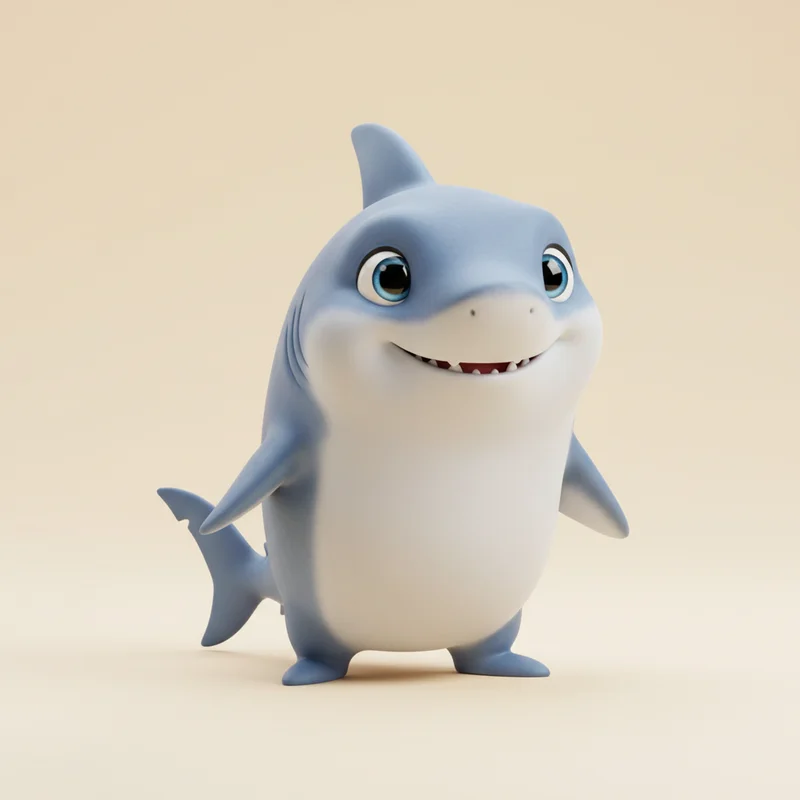
Apex ocean predator with 450 million years of evolutionary refinement and unfair movie villain reputation.

The Matchup

In the grand theatre of apex predation, two performers have captured humanity's imagination like no others. The wolf, a creature so effective at organised violence that we domesticated it into Labradoodles. The shark, a design so flawless that evolution essentially gave up trying to improve it 450 million years ago. One hunts in packs across frozen tundra; the other patrols the depths with the quiet confidence of something that predates trees. This is not merely a comparison of predators—it is an examination of two entirely different philosophies of murder.

Battle Analysis

Fear factor Shark Wins
🏆 Shark takes this round

Wolf

Wolves occupy a peculiar position in human psychology—simultaneously feared and romanticised. Actual wolf attacks on humans are vanishingly rare (fewer than 30 fatal attacks in North America in 100 years), yet they feature in approximately 90% of all fairy tales as the villain. This disproportionate fear response speaks to something primal, though modern humans are statistically more likely to be killed by their own furniture.

Shark

The shark has achieved something remarkable: a fear response entirely disconnected from statistical reality. Averaging 5-10 human fatalities annually worldwide, sharks nonetheless inspire a terror industry worth billions—films, documentaries, entire television weeks. The 1975 film Jaws single-handedly created beach anxiety that persists half a century later. Cows kill more people annually, yet no one has made Hooves.

VERDICT

The shark's cultural dominance of human fear is unmatched. Despite lower actual danger, the shark has successfully positioned itself as the final boss of ocean-based nightmares. This is marketing genius of the highest order.

Hunting efficiency Shark Wins
🏆 Shark takes this round

Wolf

The wolf operates as part of a highly coordinated military unit, employing tactics that would make NATO strategists weep with admiration. A wolf pack's success rate hovers around 14-20% for large prey—seemingly modest until one considers they're attempting to murder elk whilst weighing roughly the same as a large sofa cushion. Their strategy involves relay pursuit, psychological warfare, and an understanding of terrain that suggests they've been reading Sun Tzu in their spare time.

Shark

The great white shark approaches hunting with the subtlety of a torpedo with teeth. Utilising electroreception to detect prey's heartbeat and a burst speed of 35 mph, the shark's success rate for ambush attacks reaches an impressive 55%. However, unlike wolves, sharks largely operate on the 'surprise and overwhelm' school of thought, which, whilst effective, lacks the artistic complexity of pack coordination. One must also note that sharks occasionally bite surfboards, suggesting their target identification system has room for improvement.

VERDICT

Raw efficiency favours the shark's ambush methodology, though the wolf's lower percentage belies the extraordinary difficulty of their chosen prey. The shark wins on statistics, but the wolf wins on style points.

Social intelligence Wolf Wins
🏆 Wolf takes this round

Wolf

Wolf packs represent one of nature's most sophisticated social structures, featuring complex hierarchies, cooperative pup-rearing, and communication systems involving facial expressions, body posture, and vocalisations. They maintain territories through diplomatic scent-marking rather than constant warfare, and have been observed engaging in what can only be described as recreational play—a luxury permitted only to the cognitively advanced.

Shark

Sharks possess the social sophistication of a very angry turnip. Whilst some species demonstrate loose aggregation behaviour and certain hierarchies exist around feeding, the general shark philosophy towards other sharks ranges from 'tolerate' to 'consume'. Their problem-solving abilities are genuine—they can navigate complex mazes and demonstrate learning—but their interpersonal skills remain, charitably, underdeveloped.

VERDICT

The wolf's pack dynamics and emotional intelligence represent a clear victory in this category. Sharks may be excellent at being sharks, but wolves have mastered the art of being excellent together.

Territorial dominance Wolf Wins
🏆 Wolf takes this round

Wolf

A wolf pack's territory can span up to 1,000 square miles, defended through coordinated patrol routes, strategic scent-marking, and occasional violent border disputes. Their territorial system is so effective that it's been shown to create trophic cascades—in Yellowstone, wolf reintroduction literally changed the course of rivers by altering elk grazing patterns. Few creatures can claim their real estate decisions affect geography itself.

Shark

Great whites patrol territories spanning thousands of ocean miles, with some individuals crossing entire oceans. However, calling this 'territorial dominance' is generous—it's more accurately described as extremely confident wandering. Sharks don't defend territory so much as occupy it temporarily whilst looking menacing. Their domain is vast but their commitment to any particular patch of water is approximately zero.

VERDICT

The wolf's active territorial management and ecosystem-altering influence demonstrates genuine dominance. The shark merely visits; the wolf transforms and controls.

Evolutionary perfection Shark Wins
🏆 Shark takes this round

Wolf

Wolves emerged approximately 800,000 years ago, a relatively recent arrival to the predator party. In this time, they've colonised every habitat from Arctic ice to Arabian deserts, demonstrating remarkable adaptive radiation. Their most significant evolutionary achievement, however, was convincing humans to feed them biscuits and let them sleep on beds—a predatory strategy so advanced it defies classification.

Shark

Sharks have existed for 450 million years—they predate Saturn's rings, dinosaurs, and the concept of dry land being interesting. They survived five mass extinctions with the biological equivalent of a shrug. The great white's design has remained essentially unchanged for 16 million years because, frankly, perfection requires no revision. When your blueprint predates flowers, one has rather proved the concept.

VERDICT

The shark's 450 million years of continuous operation represents the longest successful business model in Earth's history. The wolf, despite impressive adaptability, is essentially a startup by comparison.

👑

The Winner Is

Shark

Takes 3 of 5 rounds

In this confrontation between land's most sophisticated pack hunter and evolution's most persistent design, the shark emerges with a narrow victory of 53% to 47%. The wolf's superior intelligence, social complexity, and genuine territorial influence are formidable achievements for an 800,000-year-old species. However, the shark's ancient perfection, ruthless efficiency, and inexplicable grip on human psychology represent a different category of success entirely. One has mastered the art of living well; the other has mastered the art of simply persisting—for nearly half a billion years.

Share this battle

More Comparisons